


Is Solar Power Practical for Factories in Tarapur MIDC?

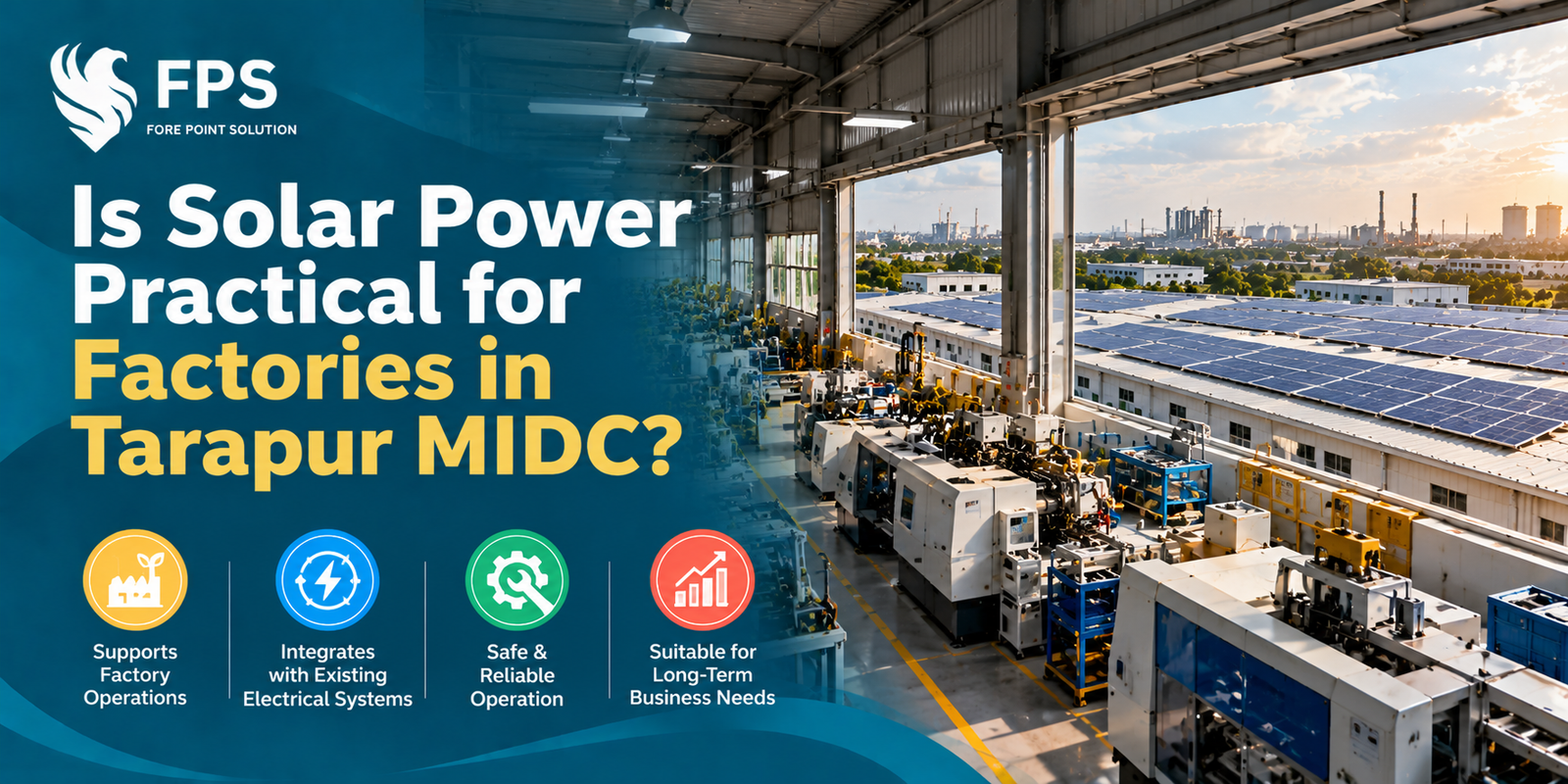
Running a factory means keeping many things moving at the same time. Machines need electricity, workers need a safe working environment, and production cannot stop because of unnecessary maintenance work.
This is why factory owners in Tarapur MIDC may have an important question when considering solar power: Can solar be installed without making factory operations difficult?
The answer depends on the factory, its electricity use, roof space and existing electrical setup. But with proper planning, solar can be considered as part of an industrial facility’s overall energy setup.
Before making a decision, there are a few practical things every factory owner should look at.
Solar for a Factory Is Different From Solar for a Home
A factory has very different electricity needs compared with a home.
There may be heavy machinery, motors, pumps, compressors, lighting and cooling systems running for several hours a day. Some factories may also work in multiple shifts.
So, installing solar at a factory needs more planning.
The first step is to understand how the factory works.
For example:
- What are the factory working hours?
- How many shifts are there?
- Which machines use the most electricity?
- How much electricity is used during the day?
- Where can solar panels be installed?
- How will maintenance workers access the panels later?
These questions help determine whether solar can fit comfortably into the factory’s daily operations.
Will Solar Installation Disturb Factory Work?
This is a common concern for factory owners.
Nobody wants an installation project to interfere with production or create safety problems for workers.
Solar installation involves putting mounting structures and panels on the roof, routing cables and connecting the system to the electrical setup. At an industrial site, these activities need to be planned carefully.
The installation team should understand the factory’s working schedule and identify areas where work can be carried out safely.
For example, rooftop work can be planned during suitable hours, while electrical work can be coordinated with the factory’s operations.
The exact approach will depend on the site. But good planning can help reduce unnecessary disruption.
Before starting the project, the installation team should also understand:
- Where workers normally move around
- Where machinery is located
- Which areas need restricted access
- How materials will be moved
- Where electrical equipment is located
A proper site visit can help identify these things before installation begins.
Ready to Reduce Your Electricity Bills with Solar?
Find out how much you can save before future policy changes and rising demand increase costs. Get expert guidance on the right solar system and available subsidy benefits.
⚡ Solar Savings CalculatorCan Solar Be Connected to the Factory’s Existing Electrical System?
A factory already has an electrical system in place. Solar needs to work with that system.
This is why solar installation is not just about choosing panels.
The complete system can include:
- Solar panels
- Inverters
- Electrical panels
- Cables
- Safety and protection equipment
- Monitoring systems
The existing electrical setup needs to be checked before deciding how the solar system will be connected.
For an industrial facility, this is especially important because the factory may have heavy machinery and different types of electrical loads.
A professional solar installer can inspect the existing setup and plan the connection based on the factory’s requirements.
The goal is simple: solar should fit into the factory’s electrical system properly rather than create unnecessary complications.
What Happens When the Factory Needs More Electricity?
A factory does not use the same amount of electricity every hour.
Electricity demand may increase when more machines are running and decrease during breaks or periods of lower production.
Solar generation also changes during the day because the amount of sunlight changes.
So, businesses should not expect solar to produce exactly the same amount of electricity throughout the day.
Instead, solar can become one part of the factory’s overall electricity supply.
When solar power is available, it can contribute towards the factory’s electricity needs. When solar generation is lower, the existing electricity supply can continue to support the factory, depending on the system setup and applicable arrangements.
Monitoring the system can help factory owners understand how much electricity their solar panels are actually producing.
They can keep track of:
- Daily solar generation
- Monthly generation
- Factory electricity consumption
- Inverter performance
- System alerts
Over time, this information gives the business a better idea of how solar is supporting its operations.
What About Safety and Maintenance?
Installing solar is not the end of the process. The system also needs to be checked and maintained.
This is particularly important for factories because industrial areas can have dust, machinery, equipment and other activities around the property.
Some simple maintenance checks include:
Keep the panels reasonably clean
Dust and dirt can build up on panels. Rain may wash away some loose dust, but it may not remove mud, bird droppings or other deposits.
Check the roof and mounting structure
The panels and their supporting structure should be inspected from time to time, especially after strong winds or heavy weather.
Check cables and electrical equipment
Electrical components should be checked by qualified professionals as part of regular maintenance.
Keep access safe
Workers should be able to reach the solar equipment safely when inspection or maintenance is required.
Monitor the system
If solar generation suddenly drops and stays low even when weather conditions are normal, it is worth checking whether there is a technical issue.
Regular maintenance does not have to be complicated. The important thing is to have a proper schedule and address problems when they are noticed.
Is Solar Practical for Your Factory in Tarapur MIDC?
There is no single answer for every factory.
One factory may have a large suitable roof and high daytime electricity use. Another may have limited roof space or shading issues. Some factories may operate during the day, while others may run multiple shifts.
This is why the best way to evaluate solar is to look at the factory as a whole.
Consider:
- How much electricity the factory uses
- When the electricity is being used
- Available roof space
- Roof condition
- Shading
- Existing electrical infrastructure
- Installation requirements
- Maintenance needs
A proper site assessment can help the factory owner understand whether solar is practical and what type of system may be suitable.
For factories in Tarapur MIDC, Fore Point Solution can help assess your site, electricity requirements and existing setup and guide you through the next steps towards a suitable commercial solar solution.
FAQs
Can solar be installed while a factory is operating?
Yes. Installation can be planned around the factory’s working schedule to reduce unnecessary disruption. The exact approach depends on the site and installation requirements.
Will installing solar stop factory production?
Solar installation does not necessarily mean production has to stop. Proper planning and coordination can help minimise disruption.
Can solar work with an existing factory electrical system?
Yes, solar can be integrated with an existing electrical setup, but the system needs to be designed according to the factory’s electrical infrastructure and requirements.
Does a factory solar system need regular maintenance?
Yes. Panels, mounting structures, electrical connections and other components should be inspected regularly to keep the system working properly.
Does dust affect solar panels in industrial areas?
Dust and other deposits can collect on panels and may affect the amount of sunlight reaching them. Regular inspection and cleaning when required can help maintain performance.
How can a Tarapur MIDC factory know if solar is suitable?
A review of the factory’s electricity use, operating hours, roof space, shading and electrical setup can provide a clearer picture. A professional site assessment is a useful first step.


