


Can Solar Panels Generate Electricity on Cloudy Days? What Businesses Should Know

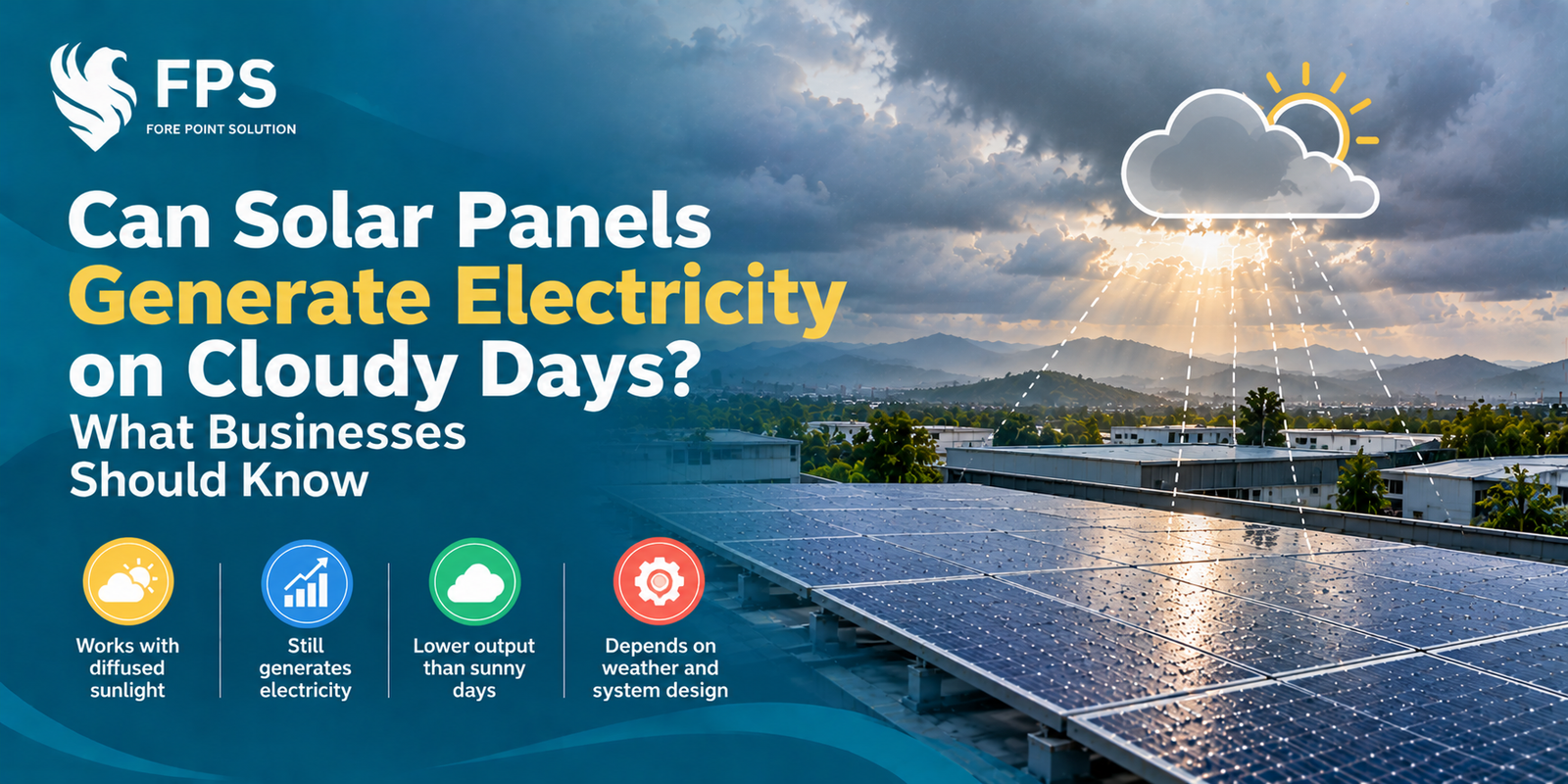
Cloudy weather often raises an important question for businesses considering solar power: Can solar panels still generate electricity when the sun is not clearly visible?
The answer is yes. Solar panels do not need bright, direct sunlight every minute of the day to generate electricity. They can also use diffused sunlight, which passes through and scatters across clouds.
However, the amount of electricity generated can vary depending on the thickness of the cloud cover and the amount of sunlight reaching the panels. A lightly cloudy day may still provide reasonable solar generation, while dense clouds can result in lower output.
For businesses in Palghar, understanding this difference is important when evaluating a commercial solar system. Solar performance should be considered over longer periods rather than based on a single cloudy day.
How Solar Panels Generate Power on Cloudy Days
Solar panels use photovoltaic cells to convert available sunlight into electricity. While direct sunlight provides stronger solar energy, photovoltaic cells can also respond to diffused sunlight.
When clouds cover the sun, sunlight is scattered in the atmosphere before reaching the ground. Some of this light still reaches the solar panels, allowing them to continue producing electricity.
The level of generation depends on several factors, including:
- Thickness of cloud cover
- Available daylight
- Panel orientation and tilt
- Shading from surrounding structures
- Solar panel quality
- System design
- Location and local weather conditions
This means that a cloudy sky does not automatically mean zero solar generation.
For a business with a properly designed solar installation, electricity production can continue throughout the day, although the output may be lower than it would be under clear-sky conditions.
How Cloud Cover Affects Commercial Solar Power Generation
Cloud conditions can change significantly throughout the day, which means solar generation can also fluctuate.
For example, a business may experience:
Partly cloudy conditions: The system can continue generating electricity, with output changing as clouds move across the sky.
Overcast conditions: Reduced sunlight can result in lower generation.
Dense cloud cover: Solar production may decrease considerably because less sunlight reaches the photovoltaic cells.
Clouds followed by sunshine: Generation can increase again when stronger sunlight becomes available.
For businesses, these daily fluctuations are normal. The more important question is whether the solar system is performing consistently over time.
A commercial solar system in Palghar should therefore be evaluated using daily, monthly and annual generation data, rather than comparing one cloudy day with a bright sunny day.
Ready to Reduce Your Electricity Bills with Solar?
Find out how much you can save before future policy changes and rising demand increase costs. Get expert guidance on the right solar system and available subsidy benefits.
⚡ Solar Savings CalculatorWhat Businesses Should Monitor on Cloudy Days
Monitoring solar generation helps businesses understand whether changes in output are related to normal weather conditions or whether the system requires attention.
Businesses should regularly monitor:
Energy Generation
Track how much electricity the solar system produces each day and month.
Inverter Performance
The inverter converts electricity generated by the panels into usable power. Error messages or unusual readings should be investigated.
Historical Performance
Compare current generation with previous periods under similar weather conditions where possible.
Unexpected Drops
A lower output on a cloudy day can be normal. However, an unexpected and sustained reduction in generation may indicate an issue with the panels, inverter, wiring, shading or other components.
Energy Consumption
Businesses can also compare solar generation with their overall electricity consumption to understand how much of their energy requirement is being supported by solar.
For commercial properties, regular monitoring can help identify performance issues early and support better energy management.
Ready to Reduce Your Electricity Bills with Solar?
Find out how much you can save before future policy changes and rising demand increase costs. Get expert guidance on the right solar system and available subsidy benefits.:zap: Solar Savings Calculator
How Businesses Can Maintain Solar Performance in Cloudy and Rainy Weather
Weather conditions are only one part of solar system performance. Proper maintenance also plays an important role.
Businesses should consider the following practices:
Keep Panels Clean
Dust, dirt, bird droppings and other deposits can reduce the amount of sunlight reaching the photovoltaic cells. Rain may remove some loose dust, but it does not replace proper cleaning when required.
Inspect After Severe Weather
After heavy rain or strong winds, inspect the panels and mounting structures for visible damage or movement.
Check the Electrical System
Cables, connectors and other electrical components should be inspected as part of regular professional maintenance.
Monitor the Inverter
Check for error messages or unusual system behaviour.
Review Generation Data
Regularly reviewing generation trends can help identify changes that may otherwise go unnoticed.
For businesses in Palghar, scheduling periodic solar system inspections can help maintain reliable performance through changing weather conditions.
How Commercial Solar Can Support Businesses Throughout the Year
Cloudy days are a normal part of operating a solar energy system. Businesses should therefore evaluate solar based on long-term energy generation rather than the output of individual days.
A properly planned commercial solar system can generate electricity whenever sufficient sunlight is available, with production naturally varying according to weather and seasonal conditions.
For businesses in Palghar, factors such as electricity consumption, available rooftop space, shading, system capacity and site conditions should be considered before installation.
A professional assessment can help businesses determine the appropriate system size and understand expected energy generation.
Looking to install solar for your business in Palghar? Fore Point Solution can help assess your site, energy requirements and commercial solar requirements to develop a suitable solar solution.
FAQs
Can solar panels generate electricity on cloudy days?
Yes. Solar panels can generate electricity from diffused sunlight on cloudy days. However, output is generally lower than under clear-sky conditions.
Do solar panels need direct sunlight to work?
No. Solar panels can generate electricity using both direct and diffused sunlight, although direct sunlight generally provides stronger energy input.
How much power do solar panels generate on a cloudy day?
There is no fixed output for every cloudy day. Generation depends on cloud density, daylight availability, system design, panel orientation, shading and other site-specific conditions.
Should businesses worry about lower solar generation on cloudy days?
Some variation in generation is normal. Businesses should monitor longer-term performance and investigate unexpected or sustained drops in output.
Are commercial solar panels suitable for businesses in Palghar?
Commercial solar systems can be considered by businesses in Palghar based on factors such as electricity consumption, rooftop or land availability, shading, system design and site conditions.
How can businesses monitor solar panel performance?
Businesses can monitor generation through the solar inverter or an energy monitoring platform and review daily, monthly and longer-term generation trends.


