


Solar Panel Performance in Cloudy Weather: Myths and Facts

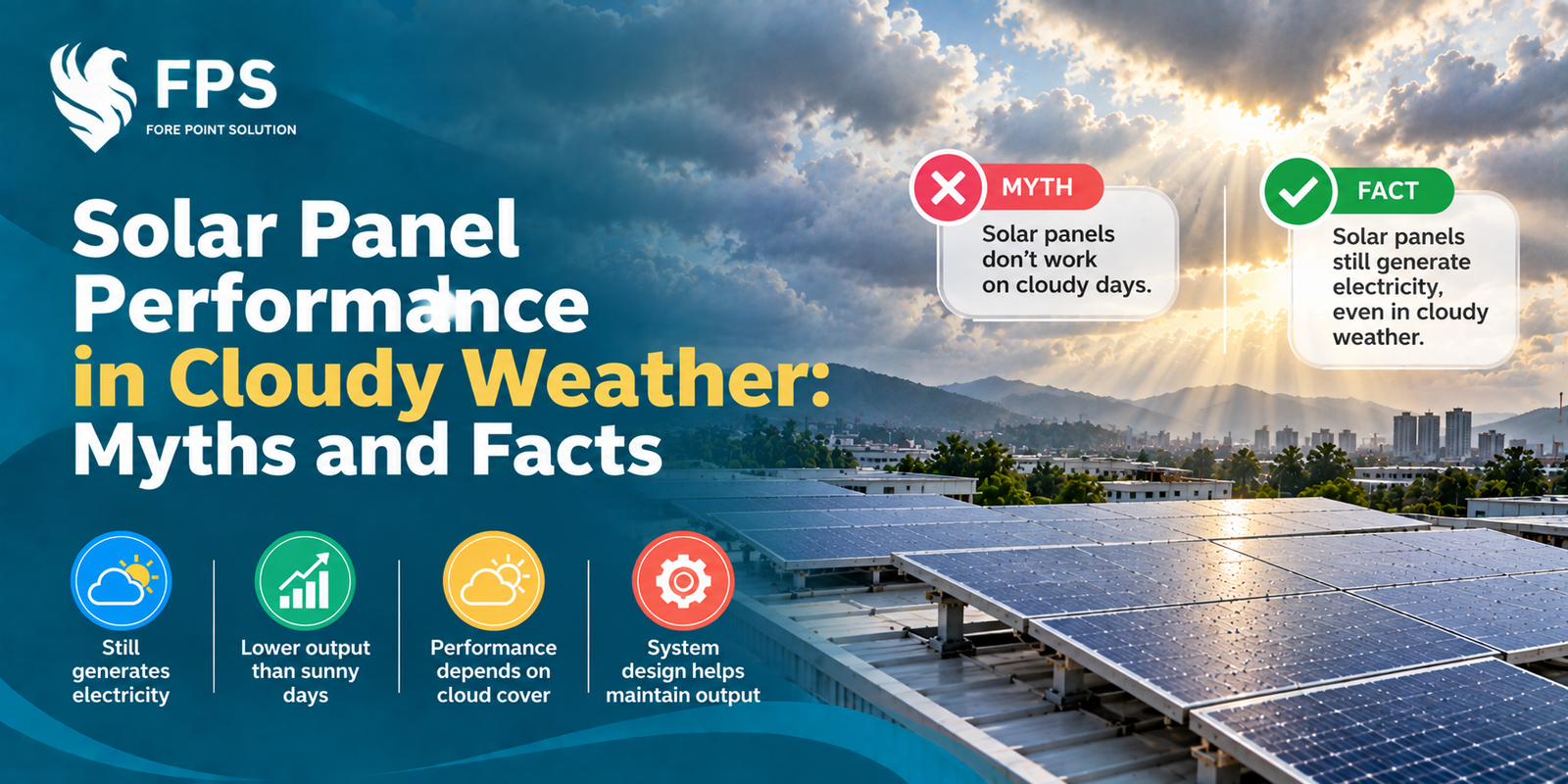
Cloudy weather often creates uncertainty about solar power. Many businesses assume that solar panels need bright sunshine to generate electricity or that a few cloudy days can significantly affect the overall value of a solar installation. In reality, solar panels can continue generating electricity even when the sky is overcast.
The amount of electricity produced can change depending on cloud cover, available daylight, system design, panel orientation, shading and other site conditions. Understanding how these factors affect performance can help businesses make better decisions about solar energy.
For businesses in Palghar considering commercial solar, knowing the difference between common solar myths and actual system behaviour is particularly useful. Here are some of the most common misconceptions about solar panel performance in cloudy weather.
1. Myth vs Fact: Do Solar Panels Stop Working When It Is Cloudy?
Myth: Solar panels only work when the sun is directly visible.
Fact: Solar panels can continue generating electricity on cloudy days because they can use diffused sunlight.
Solar panels use photovoltaic cells to convert available sunlight into electricity. When clouds cover the sun, sunlight is scattered through the atmosphere rather than completely blocked. Some of this diffused sunlight can still reach the solar panels.
However, the amount of electricity generated can be lower than on a clear day. The thickness and density of the clouds play an important role.
For example, partly cloudy conditions may allow reasonable solar generation, while dense cloud cover can result in a more noticeable reduction in output.
This means a cloudy day does not automatically mean that a solar system has stopped working. Businesses should consider the actual generation data from their system before assuming there is a technical problem.
2. Myth vs Fact: More Heat Means More Solar Power
Myth: The hotter the weather, the more electricity solar panels will generate.
Fact: Solar generation depends primarily on the amount of solar radiation reaching the panels, not simply on air temperature.
A very hot day does not necessarily mean that solar panels will produce more electricity. Solar panels need sunlight to generate power, while excessive heat can affect the efficiency of photovoltaic cells.
This is why businesses should not judge solar performance based only on temperature.
Factors such as:
- Available sunlight
- Cloud cover
- Panel orientation
- Shading
- Panel condition
- System design
- Inverter performance
can all influence electricity generation.
For commercial solar installations, monitoring actual energy production provides a much more useful picture of system performance than simply looking at the day’s temperature
Ready to Reduce Your Electricity Bills with Solar?
Find out how much you can save before future policy changes and rising demand increase costs. Get expert guidance on the right solar system and available subsidy benefits.
⚡ Solar Savings Calculator3. Myth vs Fact: Rain and Clouds Damage Solar Panels
Myth: Regular exposure to rain and cloudy weather will damage solar panels.
Fact: Solar panels are designed for outdoor installation and are built to operate under changing weather conditions.
Rain itself does not normally damage a properly installed solar panel system. Panels, mounting structures and electrical components are designed with outdoor conditions in mind.
However, severe weather can still create situations that require inspection. Strong winds, falling branches, debris or physical impact can potentially affect panels or mounting structures.
Businesses should therefore inspect their solar installation after severe weather and look for:
- Cracked or damaged panels
- Loose mounting components
- Damaged cables
- Debris accumulation
- Unusual inverter alerts
- Visible water-related issues around electrical equipment
Regular professional maintenance can help identify potential problems before they affect system performance.
4. Myth vs Fact: A Drop in Daily Generation Means the System Has a Problem
Myth: If solar generation falls on a cloudy day, the system is not working properly.
Fact: Weather-related fluctuations in daily generation are normal.
Solar generation changes according to the amount of sunlight available throughout the day. Cloud movement can cause output to rise and fall even within a few hours.
A temporary reduction in generation during cloudy weather does not necessarily indicate a technical issue.
Businesses should instead look at longer-term performance indicators such as:
- Daily generation trends
- Monthly energy production
- Historical system performance
- Inverter data
- System alerts
- Seasonal generation patterns
If generation remains unusually low even when weather conditions improve, further investigation may be appropriate.
For businesses in Palghar, monitoring these trends can help distinguish between normal weather-related variation and a potential system issue.
5. Myth vs Fact: Solar Panels Need Perfect Weather to Be Useful
Myth: Solar power is only useful when there are consistently sunny days.
Fact: Solar systems are designed to generate electricity under changing weather conditions, with output naturally varying according to available sunlight.
No solar installation will produce the same amount of electricity every day. Weather, season, daylight hours and site conditions all influence generation.
This is why businesses should evaluate solar based on long-term energy generation rather than the output of a single day.
A commercial solar system can continue contributing electricity whenever sufficient sunlight is available. Proper system sizing and installation can also help align expected solar generation with a business’s energy requirements.
For a business evaluating solar in Palghar, factors such as electricity consumption, available rooftop space, shading, panel orientation and system capacity should be assessed before installation.
6. What Businesses Should Really Know About Solar Performance in Cloudy Weather
Cloudy weather is a normal operating condition for solar panels, not necessarily a sign that a solar system is failing.
The key points businesses should remember are:
- Solar panels can generate electricity from diffused sunlight.
- Cloud cover can reduce electricity generation.
- Daily generation can naturally fluctuate with weather conditions.
- High temperatures do not automatically mean higher solar output.
- Properly installed solar panels are designed for outdoor conditions.
- Regular monitoring helps identify unusual performance.
- Long-term generation is more meaningful than the output from one cloudy day.
- Proper system design and maintenance are important for reliable performance.
For businesses in Palghar, understanding these factors can help set realistic expectations from a commercial solar installation and support better energy planning.
If you are considering solar for your business, a professional assessment of your electricity consumption, site conditions and available installation space can help determine the appropriate solar solution.
Fore Point Solution can help businesses assess their solar requirements and explore suitable commercial solar solutions for their property.
FAQs
Do solar panels work when it is cloudy?
Yes. Solar panels can generate electricity from diffused sunlight on cloudy days, although the output may be lower than on a clear day.
Do solar panels stop generating electricity during rain?
No. Solar panels can continue generating electricity when there is sufficient daylight, although heavy cloud cover and rainfall can reduce the amount of power produced.
Does hot weather increase solar panel output?
Not necessarily. Solar generation primarily depends on available solar radiation. Excessive heat can also affect photovoltaic efficiency.
Can cloudy weather damage solar panels?
Normal cloudy and rainy weather does not normally damage properly installed solar panels. However, panels and mounting structures should be inspected after severe weather.
Why does solar generation decrease on cloudy days?
Clouds reduce the amount of sunlight reaching the photovoltaic cells. The denser the cloud cover, the greater the potential reduction in electricity generation.
How can businesses monitor solar panel performance?
Businesses can use inverter data or a solar monitoring platform to track daily, monthly and long-term energy generation and identify unusual changes in performance.


