


How to Choose the Right Rooftop Solar System for Your Home in Palghar

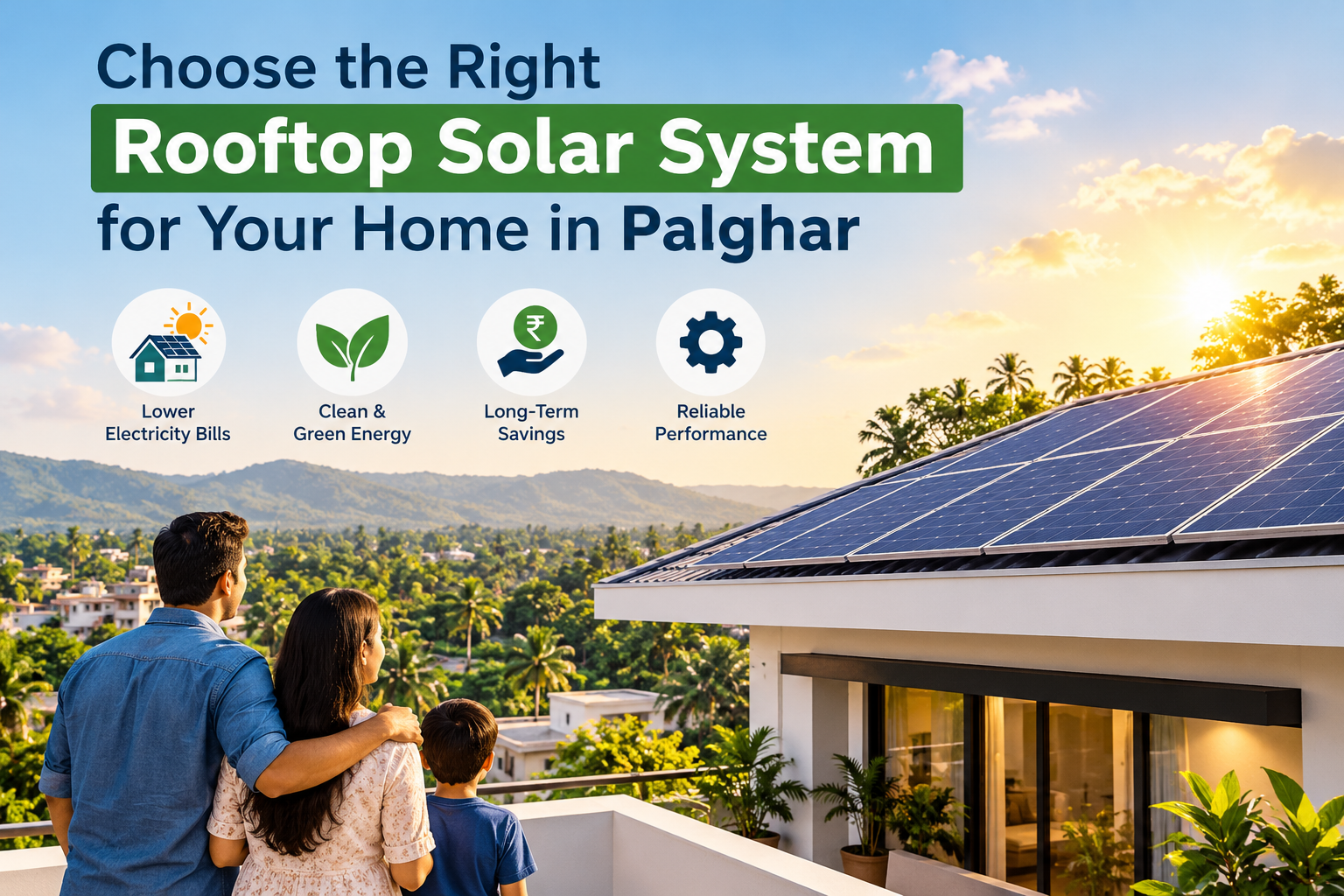
Rising electricity bills can make it difficult for homeowners to manage monthly household expenses. Installing rooftop solar panels can help generate electricity from sunlight and reduce the amount of power purchased from the grid. However, choosing the wrong system capacity, overlooking roof conditions or ignoring installation quality can affect performance and costs.
If you are planning to install rooftop solar for your home in Palghar, start by understanding your electricity consumption, available roof space and budget. You should also compare equipment, check subsidy eligibility and understand Maharashtra’s net-metering process. Fore Point Solution provides residential solar installation, system selection guidance and ongoing maintenance support to help homeowners plan their installations according to their property requirements.
1. Choose the Right Solar System Capacity
One common mistake is selecting a solar system based only on its price or a neighbour’s installation. Your electricity consumption should determine the starting point.
Check your electricity bills from the last three to six months and calculate your average monthly consumption. A household using around 300–450 units monthly might consider a 3 kW system as an initial option for assessment, but the suitable capacity depends on sunlight, appliance usage, roof conditions and actual generation estimates.
As a rough planning guide, a rooftop solar installation may require approximately 80–100 square feet per kW of usable space, although the actual requirement varies with panel dimensions, spacing and roof layout. A 3 kW system could therefore need around 240–300 square feet.
Fore Point Solution can assess your electricity requirements and available roof space before recommending a suitable residential solar setup. This helps avoid installing a system that is unnecessarily large or too small for your needs.
2. Check Your Roof and Local Weather Conditions
Palghar experiences monsoon rainfall and humid conditions, while properties closer to the coast may also face salt-laden air. These conditions make roof preparation and mounting quality important when installing solar panels.
Before installation, check whether the roof is structurally suitable, whether nearby buildings or trees create shade, and whether water tanks leave enough space for panels. Roof waterproofing should also be in good condition because poorly planned mounting can create leakage problems.
For properties exposed to coastal air, suitable corrosion-resistant mounting materials and correctly protected electrical connections are important. The installer should also consider wind loads and safe drainage during heavy rainfall.
Fore Point Solution offers residential rooftop solar solutions across Palghar and nearby areas. Its team can assess site conditions and plan panel placement, mounting and electrical installation around the requirements of the property.
Ready to Reduce Your Electricity Bills with Solar?
Find out how much you can save before future policy changes and rising demand increase costs. Get expert guidance on the right solar system and available subsidy benefits.
3. Understand On-Grid, Off-Grid and Hybrid Systems
Choosing the wrong system type can create problems, particularly if you expect solar panels to supply electricity during power cuts.
An on-grid system connects to the electricity grid but generally does not provide backup during an outage. A hybrid system remains grid-connected and uses batteries to provide backup when properly configured. An off-grid system operates without a grid connection and typically relies on batteries for stored energy.
For a home with a reliable electricity connection, an on-grid system may be suitable when the primary goal is reducing grid electricity consumption. If power cuts are frequent, a hybrid system may be worth considering, although battery storage increases the initial cost.
Fore Point Solution offers on-grid, off-grid and hybrid solar solutions. Discuss your backup requirements, essential appliances and budget before selecting the system.
4. Compare Solar System Costs and Equipment
The total cost depends on system capacity, panel and inverter brands, mounting structure, roof conditions, electrical protection and installation work.
As a broad budgeting estimate, a residential 3 kW on-grid system may cost approximately ₹1.5 lakh–₹2.1 lakh before subsidy. This is an indicative market range, not a quotation from Fore Point Solution. Actual prices may differ according to equipment specifications, installation conditions and current market rates.
Ask for an itemised quotation that explains the panel and inverter models, mounting materials, installation charges, applicable taxes and warranty coverage. Solar panels commonly carry performance warranties of around 25 years, but product warranties vary by manufacturer and model. Check the written warranty terms rather than assuming every component has the same coverage.
Fore Point Solution provides residential and commercial solar installation services. Its published project portfolio also includes a 63 kW rooftop solar installation for a housing society in Pune, demonstrating experience with a residential-community project.
5. Check Subsidy Eligibility and MSEDCL Net Metering
Eligible households may receive financial assistance under the PM Surya Ghar: Muft Bijli Yojana. Under the published central subsidy structure for eligible residential installations in general states, assistance is calculated at ₹30,000 per kW for the first 2 kW and ₹18,000 for the additional 1 kW. The maximum central subsidy for an eligible system of 3 kW or more is ₹78,000 under this structure.
For example, an eligible 3 kW system costing ₹1.6 lakh-₹2.1 lakh before subsidy could cost roughly ₹0.82 lakh-₹1.32 lakh after the ₹78,000 central subsidy. This is an illustration only. Your actual cost depends on your quotation, and the subsidy is usually released after installation, inspection and approval, so you may need to pay the full amount upfront.
The subsidy is calculated on the capacity actually installed. If your approved capacity is 3 kW but a 2 kW system is installed, the subsidy would be based on 2 kW. Use a registered vendor, check that the equipment is eligible, and confirm the latest rules on the official PM Surya Ghar portal before you buy.
For grid-connected rooftop solar in Maharashtra, MSEDCL’s procedures and approvals must also be completed. Net metering allows exported electricity to be accounted for under the applicable billing arrangement, and the financial benefit depends on the approved rules and your consumption pattern. Review the official MSEDCL rooftop net-metering guidelines before proceeding.
6. Choose a Solar Installer That Provides Ongoing Support
Poor installation can lead to loose mounting, water leakage, electrical faults and reduced generation. Before choosing a company, ask whether it provides site assessment, system design, installation, testing and after-sales maintenance.
Fore Point Solution’s published company history states that it was founded in 2018, completed 100 EPC projects by 2021 and established an in-house operations and maintenance wing in 2022. Its published project record also includes a 417 kW rooftop installation at AL-Can Exports in Palghar in 2026. These are company-reported credentials and project details; the industrial installation should not be confused with a residential customer project.
You can explore its residential rooftop solar services in Palghar, Wada and Vasai or its solar installation services in Boisar and Palghar.
7. Plan for Maintenance After Installation
Solar panels need periodic cleaning because dust, bird droppings and other deposits can reduce the sunlight reaching their surfaces. Monsoon weather may help wash away some dust, but it does not eliminate the need for inspections.
Monitor electricity generation through your inverter display or monitoring application, if available. A sudden or persistent drop in output may indicate shading, an inverter warning or another issue that needs investigation.
Fore Point Solution also provides operation and maintenance services. For maintenance planning, see its solar panel maintenance services. Avoid climbing onto wet roofs or attempting electrical repairs yourself; use a qualified professional for faults and unsafe conditions.
Conclusion
Choosing rooftop solar for your home in Palghar requires the right system capacity, a suitable roof, quality equipment and a clear understanding of costs and approvals. Check the current subsidy rules, confirm MSEDCL’s metering requirements and compare written quotations before installation.
Planning to install solar at your home? Contact Fore Point Solution at +91 95616 66947 or visit its website to discuss your roof, electricity consumption and residential solar installation requirements.
Frequently Asked Questions
Q1. How much does a 3 kW solar system cost?
A 3 kW residential on-grid system may cost approximately ₹1.5 lakh–₹2.1 lakh before subsidy as a broad estimate. Obtain a current quotation for the exact equipment and installation requirements.
Q2. How much roof space is needed for rooftop solar?
A rough estimate is 80–100 square feet per kW. A 3 kW system may need around 240–300 square feet, depending on panel layout and available usable space.
Q3. How long does net metering take in Maharashtra?
The timeline depends on application completeness, technical feasibility, inspection and meter availability. Confirm the current process and expected timeline with MSEDCL; there is no single completion period that applies to every property.
Q4. Does solar work during the monsoon?
Yes. Panels can generate electricity during cloudy and rainy weather, but output generally falls when sunlight is weaker.
Q5. How can I contact Fore Point Solution?
Visit forepoint.in or call +91 95616 66947 to discuss your solar requirements and installation options.


