


How Solar Panels Continue to Generate Power During Monsoon in Maharashtra

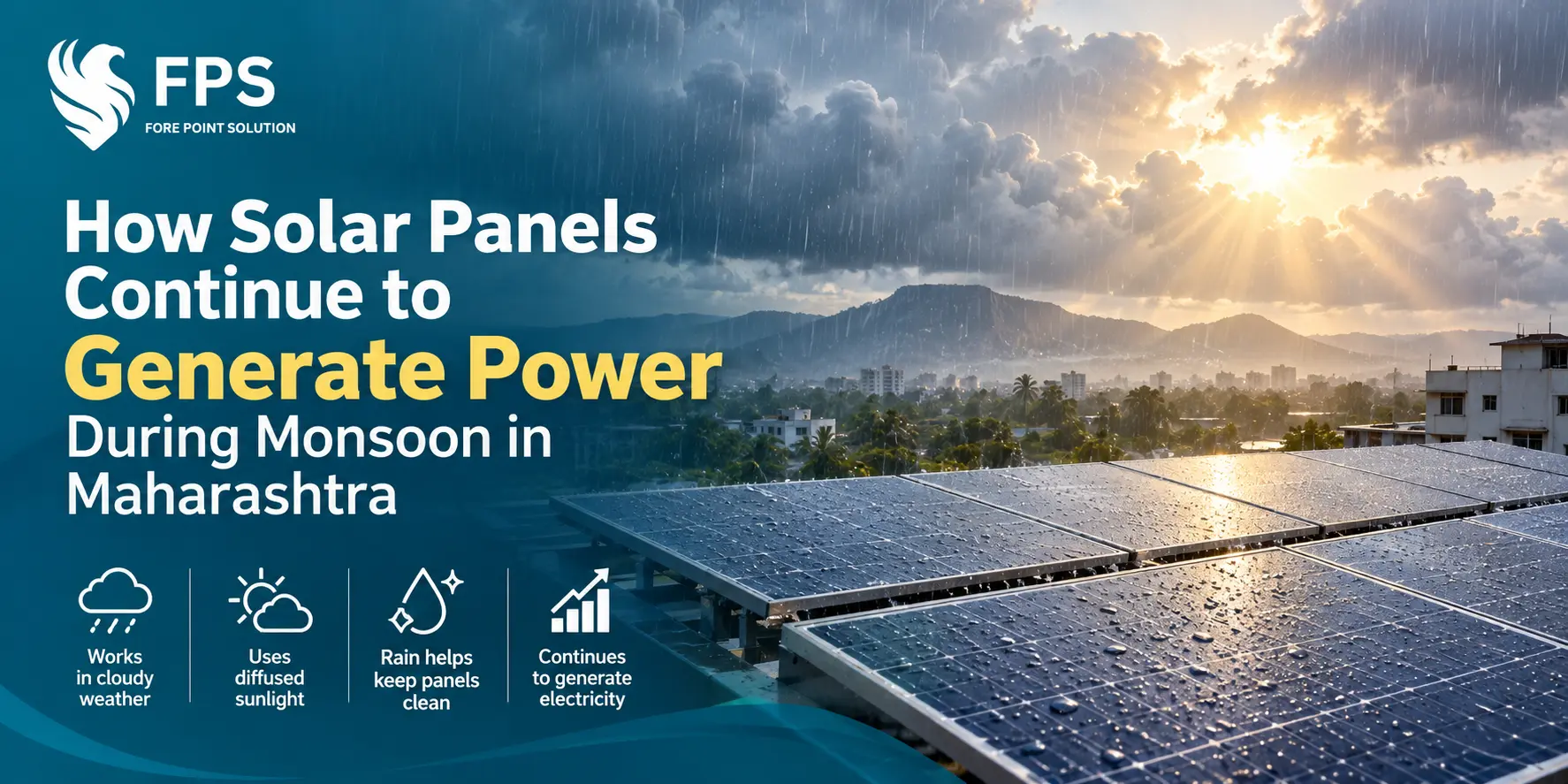
Monsoon brings cloudy skies, frequent rainfall and fewer hours of direct sunlight across Maharashtra. This often leads to a common question among homeowners and businesses: Do solar panels still generate electricity during the rainy season?
The answer is yes. Solar panels can continue to generate electricity during monsoon because they use available sunlight to produce power. They do not require bright, direct sunshine throughout the day to operate. Even when the sky is cloudy, some sunlight reaches the solar panels as diffused light.
However, electricity generation can be lower during periods of heavy cloud cover or prolonged rainfall. The amount of power produced depends on factors such as sunlight availability, weather conditions, panel orientation, shading, system design and location.
For solar system owners in Maharashtra, this means monsoon should be viewed as a seasonal variation in generation rather than a complete stop in solar production.
How Solar Panels Generate Electricity on Cloudy and Rainy Days
Solar panels contain photovoltaic cells that convert sunlight into electrical energy. While direct sunlight provides the strongest energy input, solar panels can also use diffused sunlight, which is sunlight scattered by clouds and atmospheric conditions.
This is why a solar system can continue producing electricity even when the sky is overcast.
On a bright sunny day, panels generally receive more solar radiation and can produce higher amounts of electricity. When clouds become thicker, less sunlight reaches the panels, resulting in lower output. During heavy rain accompanied by dense cloud cover, generation may decrease further.
However, as soon as brighter conditions return, the system can increase its electricity production again.
The important point is that rain itself does not switch off a solar panel system. The main factor affecting generation during monsoon is the amount of usable sunlight reaching the panels.
What Happens to Solar Power Generation During Maharashtra’s Monsoon?
Solar generation naturally changes with weather conditions. During Maharashtra’s monsoon, frequent cloud cover and rainfall can affect the amount of electricity generated on individual days.
For example:
| Weather Condition | Expected Generation |
|---|---|
| Bright and sunny | Higher generation |
| Partly cloudy | Moderate generation |
| Overcast | Lower generation |
| Light rain with daylight | Some generation |
| Heavy rain with dense clouds | Lower generation |
The actual output will vary depending on the solar installation, location, system capacity, panel orientation, shading and weather conditions.
It is therefore better to look at monthly and annual generation trends instead of judging a solar system based on one or two rainy days.
For businesses, this approach is particularly useful. A temporary reduction in daily generation during heavy monsoon conditions does not necessarily indicate a problem with the solar system.
Ready to Reduce Your Electricity Bills with Solar?
Find out how much you can save before future policy changes and rising demand increase costs. Get expert guidance on the right solar system and available subsidy benefits.
Can Monsoon Rain Actually Benefit Solar Panels?
Rain can provide one useful benefit: it can help remove loose dust and dirt from the surface of solar panels.
Before and during monsoon, dust can accumulate on outdoor surfaces. Rainfall can wash away some of this loose material and leave panels cleaner.
However, rain should not be considered a replacement for proper solar panel cleaning and maintenance. Mud, bird droppings, sticky deposits and other contaminants may remain on the panel surface even after rainfall.
After periods of heavy rain, it is also useful to check the system for:
- Mud or debris accumulation
- Physical damage
- Loose mounting components
- Cable or connector issues
- Unusual inverter alerts
- Water accumulation around electrical equipment
Regular inspection helps ensure that the system continues operating properly throughout the season.
How to Maintain Solar Panels During Monsoon
A well-maintained solar system can continue operating through changing weather conditions. Monsoon is a good time to pay attention to both the panels and the supporting system components.
Inspect the panels
Check for cracks, physical damage, mud deposits and debris after heavy rainfall or strong winds.
Check the mounting structure
The mounting structure should remain secure and stable. Any visible movement, corrosion or damage should be professionally inspected.
Monitor the inverter
Keep an eye on inverter readings and system alerts. Unexpected or prolonged drops in generation should be investigated.
Check electrical components
Cables, connectors and other electrical components should be inspected as part of regular professional maintenance.
Monitor generation
Comparing daily, monthly and historical generation data can help identify unusual performance changes.
For commercial solar installations, regular monitoring is especially valuable because it can help identify potential issues before they significantly affect energy production.
How Businesses Can Maintain Solar Performance During Monsoon
For businesses in Maharashtra, solar power can remain an important part of an overall energy strategy throughout the year. Instead of focusing only on monsoon output, businesses should monitor their overall system performance and annual energy generation.
A practical monsoon approach includes:
Before monsoon
- Inspect the complete solar system.
- Clean the panels.
- Check mounting structures.
- Inspect electrical connections.
- Review inverter performance.
During monsoon
- Monitor electricity generation.
- Check inverter alerts.
- Inspect the system after heavy rain or strong winds.
- Investigate unusual or sustained drops in output.
After monsoon
- Inspect the panels and mounting system.
- Remove accumulated dirt or debris.
- Review seasonal generation data.
- Schedule maintenance if required.
For businesses considering solar installation, proper system design, suitable equipment and professional installation are equally important for long-term performance.
Rooftop solar is also supported through national renewable-energy programmes. The Ministry of New and Renewable Energy (MNRE) provides information on grid-connected rooftop solar programmes and their implementation in India.
Planning solar for your home or business in Maharashtra? Fore Point Solution can help you assess your solar requirements, installation needs and system performance.
FAQs
Do solar panels work during monsoon?
Yes. Solar panels can continue generating electricity during monsoon when daylight is available. Generation may be lower during heavy cloud cover or rainfall.
Do solar panels generate electricity when it rains?
Yes. Solar panels can generate electricity during rainfall, although dense clouds and reduced sunlight can result in lower output.
Does rain damage solar panels?
Solar panels are designed for outdoor conditions, including exposure to rain. Proper installation, suitable equipment and regular inspection are important for long-term performance.
How much does solar generation reduce during monsoon?
There is no single reduction percentage applicable to every system. Generation depends on local weather, cloud cover, system size, orientation, shading, location and other site-specific factors.
Should solar panels be cleaned during monsoon?
Rain can remove loose dust, but it may not remove mud, bird droppings or other deposits. Panels should be inspected and professionally cleaned when necessary.
Is solar power useful in Maharashtra during monsoon?
Yes. Solar systems can continue generating electricity during monsoon, although daily production may vary. Solar performance should ideally be evaluated using longer-term monthly and annual generation data.


