



Monocrystalline vs Polycrystalline Solar Panels: Which Is Better for Maharashtra Homes in 2026?

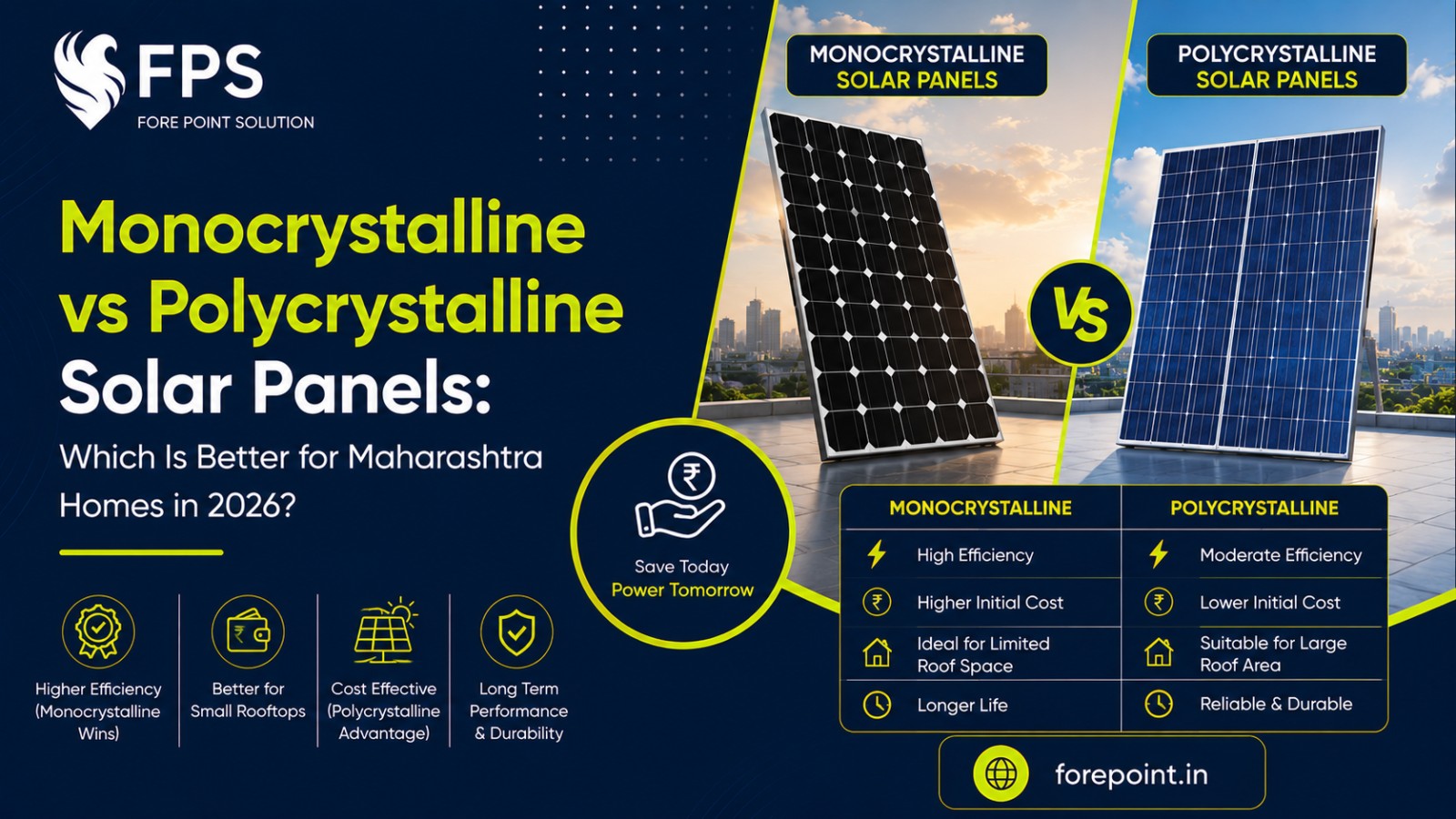
Choosing solar panels for your home is not as simple as comparing prices. The type of solar panel you select can affect the space required on your roof, electricity generation, appearance, and the overall value of your investment. For homeowners planning Solar Panel Installation in Maharashtra, two common options are monocrystalline and polycrystalline solar panels.
The question of Monocrystalline vs Polycrystalline Solar Panels becomes important when you are comparing quotations from different installers. Both technologies can be used for residential rooftop systems, but they have differences in efficiency, space requirements, cost and design. Understanding these differences can help you choose a system that suits your home rather than selecting a panel only because it has a lower price.
Monocrystalline vs Polycrystalline Solar Panels: Basic Difference
Monocrystalline and polycrystalline panels are both made using silicon, but the manufacturing process is different. Monocrystalline panels are made using silicon cells produced from a single crystal structure. Polycrystalline panels are made from multiple silicon crystal fragments.
This difference affects the appearance and performance of the panels. Monocrystalline panels generally have a darker, more uniform appearance, while polycrystalline panels usually have a blue appearance with a more visible crystal pattern.
For homeowners, however, the most important difference is not appearance. It is how much electricity the panels can produce from the available roof area and how the total system cost compares with the expected generation.
Which Panel Is More Efficient?
In most residential applications, monocrystalline panels offer higher efficiency than traditional polycrystalline panels. This means a monocrystalline module can generally produce more power from a similar amount of panel area.
This can be important for homes where terrace space is limited. If your roof has water tanks, staircases, parapet walls or other structures occupying part of the available area, using higher efficiency modules can help make better use of the remaining space.
Polycrystalline panels can still be suitable where sufficient roof area is available and the overall project cost is a major consideration.
When comparing Monocrystalline vs Polycrystalline Solar Panels in Maharashtra, do not look at efficiency alone. The panel wattage, dimensions, warranty, inverter, installation quality and expected generation should also be considered.
Which Is Better for Maharashtra’s Climate?
Maharashtra has different climatic conditions across its regions, from coastal areas to hotter inland locations. Solar panels are designed for outdoor use, but their performance can vary with temperature, sunlight, shading and other site conditions.
A panel’s temperature coefficient is worth checking when comparing products. Solar modules generally produce less power as their operating temperature rises. This does not mean solar panels stop working in hot weather, but temperature is one factor that affects actual generation.
For a homeowner, the quality of the complete system matters. Proper panel placement, ventilation, minimal shading, suitable inverter selection and correct installation can have a significant effect on performance.
Therefore, choosing between monocrystalline and polycrystalline panels should be based on your specific roof and electricity requirements rather than Maharashtra’s climate alone.
Best Solar Panels for Homes in Maharashtra
There is no single panel that can be called the best solar panels for homes in Maharashtra for every property. The right choice depends on your roof size, electricity consumption, budget and expected system capacity.
Monocrystalline panels are often a strong option for homeowners who have limited roof space and want higher power output from each square metre. They can also be useful when a homeowner wants to install a higher capacity system without using excessive terrace space.
Polycrystalline panels may make sense where roof space is adequate and the homeowner wants to keep the initial equipment cost under control.
Apart from the panel type, check the manufacturer’s warranty, performance warranty, module specifications and certification. Your installer should provide these details before you approve the quotation.
Solar Panel Cost in Maharashtra
The solar panel cost in Maharashtra depends on several factors, so there is no single price that applies to every home. The total project cost can include panels, inverter, mounting structure, cables, electrical protection, installation, transportation and other site related work.
Monocrystalline panels may have a higher upfront price depending on the product and specifications. However, comparing only the purchase price can give an incomplete picture.
Suppose one system costs more but produces more electricity from the same roof area. The additional generation may make the higher initial investment worthwhile over the operating life of the system.
Ask the installer for a complete quotation and compare the expected generation, system capacity, equipment specifications and warranty rather than comparing only the price per panel.
Roof Space Should Influence Your Decision
Your available roof area should be one of the first things considered when selecting a panel type.
A homeowner with a large, open terrace may have enough space for either technology. A home with a smaller terrace may benefit from higher efficiency monocrystalline modules.
Before finalising the system, ask for a physical site survey. The installer should identify shading, roof obstacles, access areas and the space required for safe maintenance.
Do not assume that every square metre of your roof can be covered with panels. Space may be required around equipment and access points, and some sections may receive shade during parts of the day.
Installation Quality Matters More Than Panel Type Alone
A high quality panel cannot compensate for poor Solar Panel Installation. The mounting structure, cable routing, earthing, electrical protection and inverter configuration all affect system safety and performance.
The installer should also check your roof condition before work begins. Leakage, cracks or waterproofing issues should be addressed before mounting the solar structure.
Ask the installer about the panel brand, inverter, mounting structure, warranty and after sales service. A reliable installation company should explain the complete system instead of focusing only on the panel brand.
Monocrystalline vs Polycrystalline: Which Should You Choose?
For many homeowners with limited rooftop space, monocrystalline panels can be the more practical choice because of their higher efficiency and greater power output per unit area.
Polycrystalline panels can remain a reasonable option where there is sufficient roof space and the homeowner is focused on keeping the initial investment lower.
The decision should ultimately depend on your electricity consumption, roof area, budget, system capacity and expected generation.
Before making the final decision, ask the installer to provide two system options if possible. Compare the capacity, number of panels, roof area required, expected annual generation, total project price and warranty. This gives you a clearer basis for choosing between the two technologies.
What to Check Before Installing Solar Panels in 2026
Before approving your residential solar system, review your electricity bills from the previous six to twelve months. This will help determine an appropriate system size.
Next, check your roof condition and available space. Identify trees, buildings and other structures that may cause shading. Ask for an estimate of expected generation based on the actual site.
Your quotation should clearly state the panel and inverter specifications, mounting structure, electrical protection, installation scope and warranty.
Also understand any applicable government subsidy or electricity connection procedures before making the final payment. Do not rely only on verbal promises about savings, generation or subsidy.
Conclusion
The choice between Monocrystalline vs Polycrystalline Solar Panels depends on what your home actually needs. Monocrystalline panels are generally better suited to homeowners who want higher efficiency and have limited rooftop space. Polycrystalline panels can be suitable where roof area is plentiful and initial cost is an important consideration.
For homeowners across Maharashtra, the best approach is to compare the complete system rather than just the panel type. Consider roof space, electricity consumption, expected generation, equipment quality, warranty, installation standards and total project cost.
A properly designed solar system can provide better long term value than simply choosing the cheapest panel available. Before starting Solar Panel Installation, Contact Fore Point Solution and get a site assessment and a detailed quotation so you can make the decision based on your home’s actual requirements.
Ready to Reduce Your Electricity Bills with Solar?
Find out how much you can save before future policy changes and rising demand increase costs. Get expert guidance on the right solar system and available subsidy benefits.
Frequently Asked Questions
Q1. Which is better, monocrystalline or polycrystalline solar panels?
Monocrystalline panels generally offer higher efficiency and are useful where rooftop space is limited. Polycrystalline panels can be suitable where sufficient roof space is available and upfront cost is a major consideration.
Q2. Are monocrystalline panels suitable for homes in Maharashtra?
Yes. Monocrystalline panels can be suitable for residential properties across Maharashtra. The final choice should consider roof space, electricity consumption, shading and the complete system design.
Q3. Which are the best solar panels for homes in Maharashtra?
There is no single best panel for every home. The right panel depends on efficiency, wattage, warranty, available roof space, budget and the expected generation from your specific installation.
Q4. Are polycrystalline solar panels still suitable in 2026?
Yes. Polycrystalline panels can still be considered for residential systems where sufficient roof space is available and the homeowner wants to compare lower upfront equipment costs.
Q5. What affects solar panel cost in Maharashtra?
Solar panel cost in Maharashtra depends on panel specifications, system capacity, inverter, mounting structure, electrical work, installation requirements, site conditions and applicable government benefits.
Q6. Does solar panel efficiency matter for a small rooftop?
Yes. Higher efficiency panels can generate more power from a given roof area. This can be useful when your terrace has limited usable space.
Q7. What should I check before Solar Panel Installation?
Check your electricity consumption, roof condition, usable space, shading, panel specifications, inverter, mounting structure, electrical protection, warranty, installation scope and applicable subsidy or grid connection requirements.


