



Commercial Solar Panels in Maharashtra: 2026 Subsidy, System Capacity, Market Growth & Financial Returns

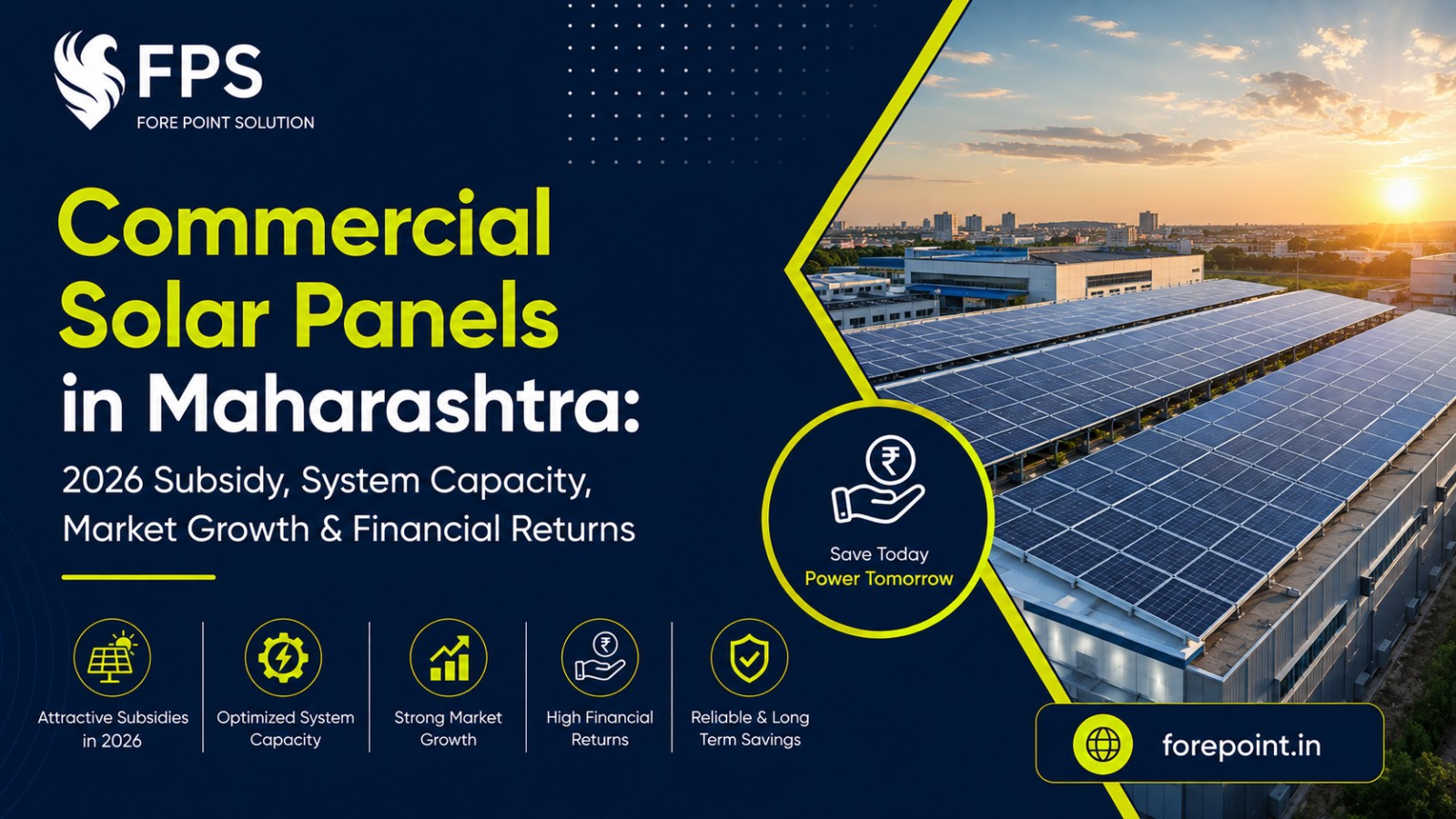
Electricity is one of the regular operating expenses for many businesses in Maharashtra. Factories, warehouses, hotels, offices, shops, hospitals and commercial buildings often consume large amounts of electricity every month. As power consumption increases, electricity bills can become a significant part of operating costs. This is one reason more businesses are considering commercial solar panels in Maharashtra as a way to generate electricity from their own rooftops.
For a business owner, solar is not only about installing panels. The important questions are how much electricity the system can generate, what capacity is suitable, what the installation will cost, whether any subsidy or financial support is available, and how long it may take to recover the investment.
In 2026, businesses evaluating commercial solar should focus on actual electricity consumption, available roof space, tariff structure and the financial return of the proposed system rather than selecting a system only on its advertised price.
Why Businesses in Maharashtra Are Considering Solar
Maharashtra has a large industrial and commercial base, with businesses operating across manufacturing, logistics, retail, hospitality, healthcare and other sectors. Many of these properties have large rooftops that remain unused.
Installing solar panels on these roofs can turn otherwise unused space into a source of electricity. During suitable daylight conditions, the system generates power that can be used by the business, potentially reducing the amount of electricity purchased from the grid.
The main reason for adopting commercial solar panels in Maharashtra is the potential reduction in electricity expenses. The actual savings depend on the system capacity, electricity consumption, tariff, solar generation, roof conditions and operating hours of the business.
A company that uses significant electricity during the daytime may find rooftop solar particularly useful because its generation generally coincides with business operating hours.
Choosing the Right Commercial Solar System Capacity
System capacity should be decided after studying the property’s electricity consumption and roof area. A business should not select a solar system simply because there is enough space to install more panels.
Review electricity bills from the previous six to twelve months and identify average monthly consumption. Also check the business’s daytime electricity usage. This information can help determine whether a smaller, medium or larger solar system is appropriate.
For example, a 100 kW system may be suitable for one commercial property but unnecessary for another. The final capacity should be based on actual consumption, available roof area, electrical infrastructure and the expected generation from the site.
A professional site survey should also check roof strength, shading, panel placement, electrical connection and space required for maintenance.
What Does a 100 kW Commercial Solar System Cost in Maharashtra?
The 100 kW commercial solar system cost Maharashtra businesses should expect cannot be represented by one fixed figure. The final project price depends on several factors, including solar module specifications, inverter selection, mounting structure, electrical work, installation conditions, cable requirements, protection equipment and the complexity of the site.
The roof itself can also affect the project cost. A straightforward industrial rooftop may require less structural work than a building with difficult access, multiple roof levels or additional reinforcement requirements.
When comparing quotations, businesses should avoid choosing purely on the lowest price. Ask for a detailed breakdown showing the system capacity, panel and inverter specifications, mounting structure, electrical components, installation work, warranties and applicable taxes.
This makes it easier to compare two proposals on the same basis.
Is There a Commercial Solar Subsidy in Maharashtra in 2026?
The question of commercial solar subsidy in Maharashtra 2026 needs careful attention because subsidy eligibility depends on the applicable government programme and the type of consumer.
Residential rooftop solar subsidy programmes are not automatically applicable to commercial and industrial consumers. Businesses should therefore not assume that a residential subsidy can be claimed for a commercial installation.
Before making an investment, confirm the latest applicable government rules, incentives, electricity regulations and any available schemes for your category of consumer. Your solar installer can help identify relevant procedures, but important financial claims should be verified against current official guidelines.
Businesses should also ask whether any available incentive applies to their specific property, system capacity and consumer category.
Solar Electricity Savings for Business
The biggest financial benefit of commercial solar can come from reducing electricity purchased from the grid. Solar electricity savings for business depend on how much energy the system generates and how that electricity is used.
For a business operating mainly during the daytime, solar generation can directly offset a portion of its daytime electricity consumption. This can reduce the amount of grid electricity required.
For example, if a commercial property has high daytime consumption and adequate rooftop space, a properly sized system may provide a meaningful reduction in electricity purchases. However, actual savings should always be calculated using the property’s electricity bills and proposed system design.
Businesses should request a generation estimate and savings calculation before approving the project. The calculation should clearly state the expected annual generation and the assumptions used.
Understanding Commercial Solar Payback
Payback refers to the approximate period required for electricity savings to recover the initial investment.
Suppose a business invests ₹X in a rooftop solar system and receives ₹Y in annual electricity savings. The simple payback can be estimated by dividing the investment by annual savings. This is only a basic calculation and does not account for every future cost or change in electricity tariffs.
Actual returns can vary because solar generation changes with weather, shading, equipment performance and system maintenance. Electricity tariffs can also change over time.
For this reason, a business should avoid choosing a solar system based on a guaranteed payback claim. A site specific financial analysis provides a more useful picture.
Market Growth and Commercial Solar Adoption in 2026
Commercial rooftop solar is receiving greater attention as businesses look for ways to control operating expenses and make better use of available infrastructure.
Large rooftops on factories, warehouses and commercial buildings provide an opportunity to install systems with meaningful generation capacity. Businesses are also becoming more interested in monitoring system performance, understanding generation data and calculating long term returns.
In 2026, the decision is increasingly about the complete financial case rather than simply installing solar because it is renewable energy. Businesses want to know how much they will invest, how much electricity the system can generate and how the investment affects operating costs.
This makes system design and accurate financial calculations especially important.
What Businesses Should Check Before Installation
Before installing commercial solar panels in Maharashtra, inspect the roof condition and confirm that the structure can support the proposed mounting system. Identify shading from nearby buildings, trees, equipment and other structures.
The electrical infrastructure should also be checked. The installer should review the existing connection, distribution board, cabling, earthing and protection requirements.
Businesses should also understand maintenance access. Solar panels need periodic cleaning and inspection, so the system layout should allow technicians to work safely.
Finally, check the warranty and after sales support. Commercial systems represent a substantial investment, and timely service can be important if an inverter or other component develops a problem.
Conclusion
For businesses evaluating commercial solar panels in Maharashtra, 2026 is a useful time to look at solar as a long term electricity cost decision. The right system can potentially reduce grid electricity consumption and make better use of large commercial and industrial rooftops.
However, the financial result depends on the individual property. System capacity, installation cost, electricity tariff, daytime consumption, solar generation and applicable incentives all affect the final return.
Whether you are considering a 100 kW system or a larger commercial installation, begin with your electricity bills and a professional site assessment. Compare detailed quotations, verify applicable subsidy or incentive rules and request a realistic savings and payback calculation before making the final decision.
Ready to Reduce Your Electricity Bills with Solar?
Find out how much you can save before future policy changes and rising demand increase costs. Get expert guidance on the right solar system and available subsidy benefits.
Frequently Asked Questions
Q1. What are commercial solar panels in Maharashtra?
Commercial solar panels in Maharashtra are rooftop or ground mounted solar systems installed for businesses, offices, factories, warehouses, hotels and other commercial properties to generate electricity.
Q2. Is there a commercial solar subsidy in Maharashtra in 2026?
Subsidy eligibility depends on the applicable government scheme and consumer category. Businesses should verify current 2026 rules rather than assuming residential subsidy benefits apply to commercial systems.
Q3. What is the 100 kW commercial solar system cost in Maharashtra?
There is no single fixed price. The 100 kW commercial solar system cost Maharashtra businesses pay depends on panels, inverter, mounting structure, electrical work, installation conditions and other project requirements.
Q4. How much can a business save with solar?
Savings depend on system capacity, electricity consumption, tariff, solar generation and how much electricity the business uses during daylight hours. A site specific calculation provides a more accurate estimate.
Q5. Is a 100 kW solar system suitable for every business?
No. The suitable capacity depends on electricity consumption, roof area, electrical infrastructure and operating requirements. A site survey and bill analysis should be completed before selecting the capacity.
Q6. How long does commercial solar take to pay back?
The payback period varies by project. Installation cost, electricity tariff, system generation, consumption and applicable incentives all affect the final financial return.
Q7. What should businesses check before installing solar?
Check roof condition, usable space, shading, electricity consumption, electrical infrastructure, equipment specifications, warranties, maintenance requirements and applicable government or regulatory procedures before installation.


