



Solar Subsidy for Housing Societies in Maharashtra: Eligibility, Benefits & How to Apply

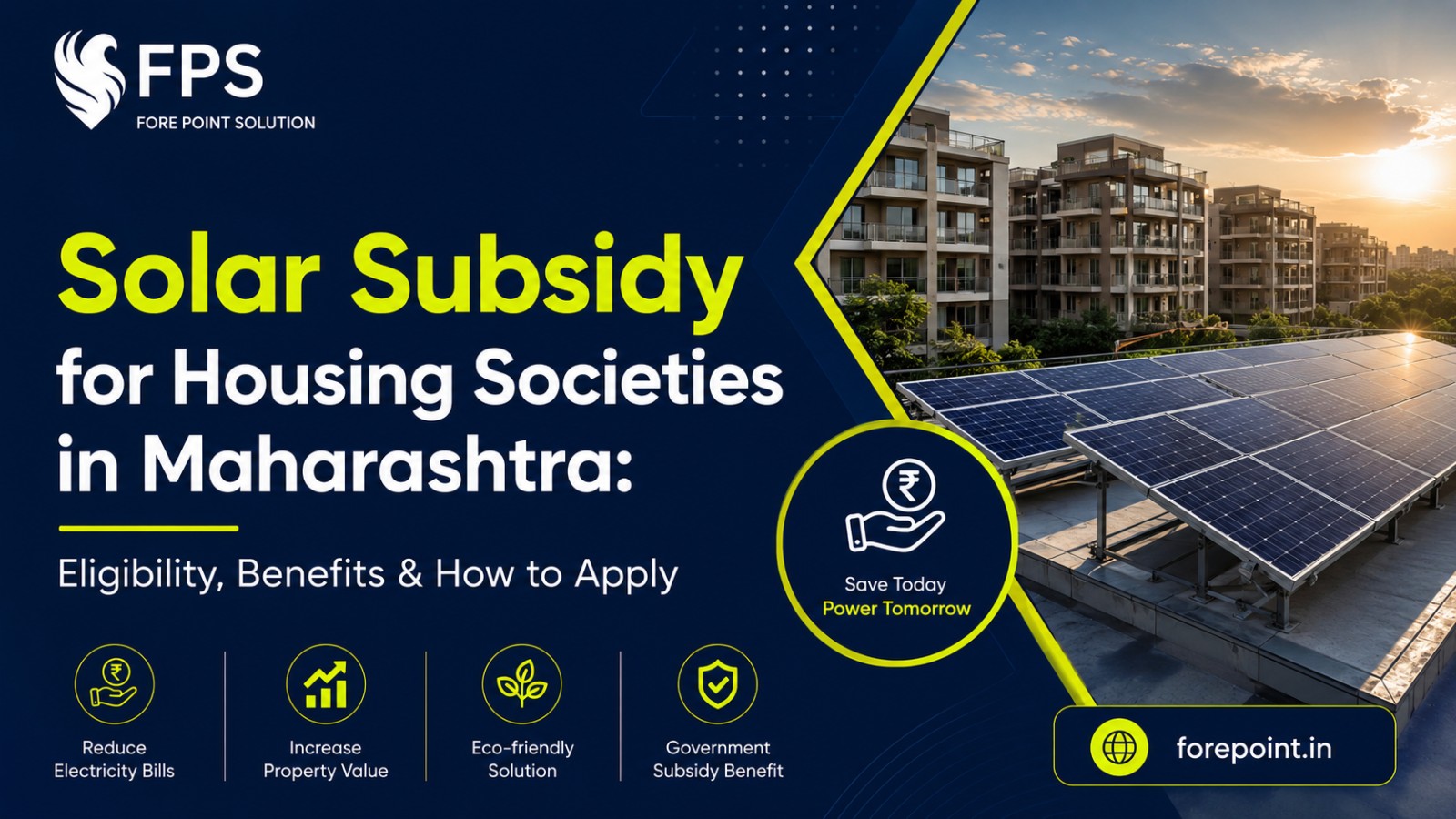
Electricity costs are a regular concern for housing societies, especially when common facilities such as lifts, water pumps, corridor lighting, security systems and other shared services run throughout the day. Rooftop solar can help societies reduce their dependence on grid electricity and manage these recurring expenses.
For residents and managing committees looking at solar subsidies for housing societies in Maharashtra, understanding the eligibility, subsidy structure and application process is important before starting a project. The subsidy support for Group Housing Societies and Resident Welfare Associations can also make rooftop solar more practical for common facilities.
What Is the Solar Subsidy for Housing Societies?
Under the subsidy structure provided for Group Housing Societies and Resident Welfare Associations, financial assistance is available for rooftop solar installed for common facilities. This can include electricity requirements for common areas and EV charging, subject to the applicable scheme conditions.
The stated subsidy for GHS/RWA is ₹18,000 per kW, for common facilities including EV charging, up to a capacity of 500 kW, calculated at up to 3 kW per house. The upper limit is inclusive of individual rooftop solar plants installed by individual residents within the GHS/RWA.
This makes the solar subsidies for societies in Maharashtra particularly relevant for larger residential communities where common electricity consumption forms a significant part of the monthly maintenance expenses.
Subsidy for Individual Residential Households
Individual homeowners within a housing society may also be eligible for residential rooftop solar subsidy, subject to the applicable scheme requirements.
The subsidy structure provided is:
| Residential Solar Capacity | Subsidy Benefit |
|---|---|
| Up to 2 kW | ₹30,000 per kW |
| Additional capacity up to 3 kW | ₹18,000 per kW |
| Systems above 3 kW | Maximum total subsidy of ₹78,000 |
This means the subsidy is linked to the installed capacity and applicable eligibility conditions. Homeowners should not assume that every system will automatically receive the maximum amount. The current government guidelines and application requirements should be checked before installation.
Subsidy for Housing Societies and RWAs
For a GHS or RWA, the subsidy can support solar installations serving common facilities. The stated rate is ₹18,000 per kW, with the eligible capacity going up to 500 kW at 3 kW per house, with the upper limit inclusive of individual rooftop plants installed by residents.
For example, a society with common electricity consumption from water pumps, lifts and lighting can assess whether a rooftop solar system can offset a portion of this consumption.
The actual project capacity should be based on electricity usage, available rooftop space, structural suitability and the applicable programme conditions.
Suitable Solar Capacity for Residential Households
Before installing solar, homeowners should review their average monthly electricity consumption. The following capacity guide can help with the initial assessment:
| Average Monthly Electricity Consumption | Suitable Rooftop Solar Plant Capacity |
|---|---|
| 0 to 150 units | 1 to 2 kW |
| 150 to 300 units | 2 to 3 kW |
| More than 300 units | Above 3 kW |
This is a general capacity guide and should not replace a property specific assessment. Actual system sizing depends on electricity consumption, roof area, shading, panel technology and other site conditions.
What Can Housing Societies Use Solar Power For?
A society can use rooftop solar to support common electricity requirements such as lifts, water pumps, security systems, common lighting and other shared facilities, depending on the system design and applicable electrical arrangement.
EV charging is another potential use specifically mentioned in the subsidy structure. As electric vehicle ownership increases, societies may have additional electricity requirements from charging infrastructure.
The managing committee should first identify the society’s common electricity consumption and review several months of bills. This provides a better basis for calculating the potential solar capacity and expected savings.
How to Apply for Solar Subsidy
The application process depends on the applicable government programme and consumer category. Before beginning the project, the society or resident should confirm eligibility and understand the required documentation.
A typical process involves assessing electricity consumption, inspecting the rooftop, deciding the system capacity, selecting an appropriate installer and completing the applicable online application and documentation.
The installer can assist with technical information, system design and documentation. However, the society should keep copies of its application records, electricity bills, invoices, approvals and installation documents.
Do not make a financial decision based only on a verbal subsidy promise. Ask the installer to clearly explain which subsidy applies, the eligibility conditions and what documentation is required.
Why a Proper Site Survey Matters
A rooftop solar project for a housing society is larger and more complex than a typical individual home installation. The installer should inspect the available terrace area, roof condition, shading, access points and electrical infrastructure.
Water tanks, lift rooms, parapet walls and other rooftop equipment can affect panel placement. The mounting structure must also be suitable for the roof and should allow access for maintenance.
The society should also check whether the proposed solar system can be safely connected to the existing electrical arrangement.
Choosing Solar Installation Services Near Palghar
For societies in Palghar and surrounding areas, selecting experienced solar installation services in Palghar can make the planning and installation process easier. However, the society should compare installers on more than price.
Ask for a detailed quotation covering solar panels, inverter, mounting structure, cables, electrical protection, installation, documentation support and warranty.
The installer should also explain expected generation and how the system is expected to reduce common electricity consumption.
A lower quotation is not necessarily better if important electrical work, structural requirements or after sales service are excluded.
Choose Fore Point Solution for Your Society’s Solar Project
If your housing society is considering rooftop solar, Fore Point Solution can help assess the property’s electricity consumption, rooftop conditions and potential system requirements.
From site assessment and system planning to installation and applicable documentation support, the focus should be on designing a system that fits the society’s actual requirements.
For societies located in Palghar and nearby areas, Fore Point Solution can also help evaluate suitable rooftop solar options for common facilities.
Planning rooftop solar for your housing society? Contact Fore Point Solution to discuss your electricity consumption, rooftop space and subsidy eligibility.
Conclusion
The solar subsidy for housing societies in Maharashtra can make rooftop solar an attractive option for communities looking to reduce common electricity expenses. Individual residents may also have access to residential rooftop solar subsidy subject to applicable eligibility and programme conditions.
Before investing, the society should review its electricity bills, inspect the rooftop, determine suitable system capacity and compare detailed installation quotations.
Most importantly, verify the latest subsidy rules and application requirements before signing the project agreement. A properly designed solar system, combined with clear documentation and professional installation, can provide long term value for both housing societies and individual residents.
Ready to Reduce Your Electricity Bills with Solar?
Find out how much you can save before future policy changes and rising demand increase costs. Get expert guidance on the right solar system and available subsidy benefits.
Frequently Asked Questions
Q1. What is the solar subsidy for housing societies in Maharashtra?
Eligible GHS/RWAs can receive a stated subsidy of ₹18,000 per kW for common facilities, including EV charging, up to 500 kW capacity at 3 kW per house, subject to applicable conditions.
Q2. Can individual residents of a housing society get solar subsidies?
Eligible residential households may receive residential rooftop solar subsidy according to the applicable scheme. The stated benefit is ₹30,000 per kW up to 2 kW and ₹18,000 per kW for additional capacity up to 3 kW, with a total subsidy capped at ₹78,000 for systems above 3 kW.
Q3. What solar capacity is suitable for a home?
As a general guide, homes using 0 to 150 units per month may consider 1 to 2 kW, 150 to 300 units may consider 2 to 3 kW, and consumption above 300 units may require more than 3 kW. A site assessment is recommended.
Q4. Can housing society solar be used for EV charging?
Yes. The stated GHS/RWA subsidy structure includes common facilities and EV charging, subject to the applicable capacity and programme conditions.
Q5. What should a society check before installing solar?
Check common electricity consumption, rooftop condition, usable space, shading, structural suitability, electrical infrastructure, system capacity, subsidy eligibility, warranty and installation responsibilities.
Q6. How do I choose solar installation services near Palghar?
Compare installers based on site assessment, technical design, equipment specifications, installation experience, warranty, documentation support and after sales service rather than selecting only the lowest price.
Q7. Is the maximum ₹78,000 subsidy available to every homeowner?
No. The subsidy amount depends on eligibility, installed capacity and the applicable government scheme conditions. Homeowners should verify the current rules before calculating their final project cost.


