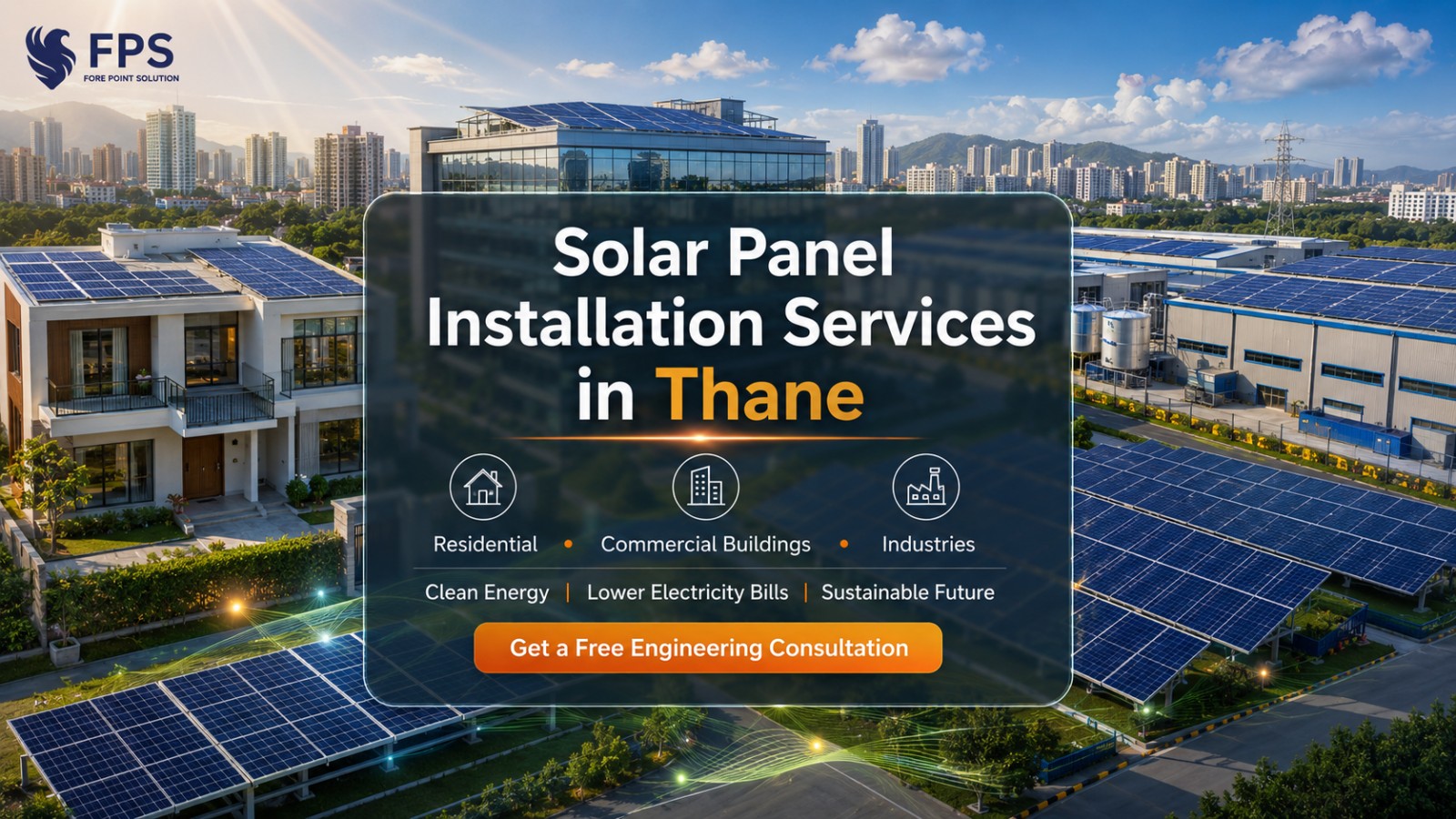
Solar Panel Installation Services in Thane for Residential, Commercial Buildings and Industries

The demand for solar energy in Thane has increased significantly in recent years. Rapid urban development, expanding industrial operations, and rising electricity costs have encouraged homeowners, businesses, and industries to adopt smarter and more sustainable energy solutions. Solar panel installation has evolved beyond being only an environmentally responsible choice and is now considered a practical long term investment that helps reduce energy expenses and improve cost efficiency.
Whether you own a residential property, a commercial establishment, or a large industrial facility, customised solar solutions are now more accessible, cost effective, and supported by various government initiatives and incentives.
Why Solar Panel Installation is Growing in Thane
Thane is one of Maharashtra’s fastest developing regions, and this rapid growth is creating a strong demand for reliable energy solutions. With increasing electricity consumption in homes and businesses, rising power costs are adding pressure on monthly expenses. As a result, demand for Solar Panel Installation in Thane is steadily increasing as property owners seek long term energy savings.
Several factors are driving this shift toward solar energy. Government initiatives and renewable energy programs have made subsidies and net metering more accessible. Thane also benefits from favourable climatic conditions with abundant sunlight throughout the year, enabling efficient power generation. Lower electricity bills, government support, and strong solar potential make Solar Panel Installation a practical and cost effective choice for residential, commercial, and industrial users.
Types of Solar Panel Installation Services
Residential Solar Panel Installation
Rooftop solar systems designed for independent houses, villas, and apartments help families reduce monthly electricity expenses while improving overall energy efficiency. Modern residential solar systems include smart monitoring capabilities, allowing homeowners to track daily energy production and consumption directly through a mobile application.
Society flat owners can also install solar panel systems on their premises after obtaining the necessary No Objection Certificate (NOC) from their housing society. This makes solar energy accessible even to apartment residents who wish to lower electricity bills and contribute towards a cleaner environment.
Commercial Solar Panel Installation
Offices, schools, hospitals, and retail businesses have significantly higher electricity requirements than individual homes. Commercial solar installations reduce operational overheads while helping organisations meet sustainability targets. Many businesses also use solar adoption as a competitive differentiator and a visible commitment to environmental responsibility.
Industrial Solar Panel Installation
Manufacturing plants, warehouses, and processing units run high-consumption machinery around the clock. Large-capacity industrial solar systems can offset a substantial portion of this energy demand, leading to meaningful reductions in operating costs : and a buffer against future tariff hikes.
Rooftop Solar Systems
Rooftop systems maximise the use of existing space without requiring additional land. They are relatively straightforward to maintain and can generate significant energy depending on system capacity and panel placement.
On-Grid, Off-Grid and Hybrid Systems
- On-grid systems connect directly to the utility network. Surplus electricity is exported back to the grid through net metering, earning credits that offset future bills.
- Off-grid systems operate independently with battery storage, making them suitable for locations where grid connectivity is unreliable or unavailable.
- Hybrid systems combine grid connectivity with battery backup, offering the best of both worlds by ensuring a reliable power supply during outages while allowing excess energy to be exported for maximum energy efficiency.
The right option depends on your energy usage pattern, budget, and backup requirements.
Key Features of Modern Solar Installation Systems
Today’s solar technology is considerably more advanced than systems from even five years ago. High-efficiency monocrystalline panels deliver greater output from the same roof area. Smart inverters improve energy conversion rates and enable remote performance monitoring. Weather-resistant mounting structures and low-maintenance designs ensure consistent performance across seasons : including the monsoon months.
Step-by-Step Solar Installation Process
A professional solar installation follows a structured sequence to ensure the system is safe, efficient, and compliant:
- Site Survey and Energy Assessment: Electricity consumption is analysed to size the system correctly.
- System Design and Planning: Engineers create a customised layout based on rooftop dimensions and energy goals.
- Roof Structure Evaluation: Load-bearing capacity is assessed before any hardware is fixed.
- Panel and Inverter Selection: Components are chosen to match the energy profile and budget.
- Installation and Wiring: Trained professionals mount panels and complete all electrical connections.
- Testing and Commissioning: The system is tested thoroughly before going live.
- Net Metering and Approvals: Regulatory approvals and net metering registration are completed as per local requirements.
Benefits of Solar Panel Installation
Lower electricity bills are the most immediate benefit. Most residential systems can substantially reduce monthly grid consumption. Over time, faster return on investment follows : while the upfront cost is real, long-term savings typically recover the investment within a few years.
Solar energy produces zero harmful emissions, directly reducing your carbon footprint. Properties fitted with solar systems also tend to command higher market valuations due to lower running costs. Add reliable power supply through battery-backed systems, and solar delivers something grid dependence never can: genuine energy independence.
Applications of Solar Power Systems
Solar systems serve a wide range of applications across Thane:
- Residential homes reduce household electricity expenses significantly.
- Apartments and housing societies can power common areas and shared amenities.
- Factories and industries offset large-scale consumption.
- Educational institutions lower running costs while setting an example for students.
- Healthcare facilities benefit from improved reliability for critical equipment.
- Agricultural operations use solar to run irrigation pumps and reduce input costs.
How to Choose the Right Solar Installation Company
The quality of your installer matters as much as the quality of your panels. Look for companies with a proven track record in solar projects, relevant industry certifications, strong product warranties, and demonstrated technical expertise. After-sales service and Annual Maintenance Contract (AMC) support are equally important : a solar system is a 25-year asset, and you need a partner who will still be responsive years after installation day.
Cost of Solar Panel Installation in Thane
Pricing depends on several variables: system capacity, roof type and structure, equipment quality (panel efficiency, inverter technology, mounting hardware), and installation complexity. Larger systems carry a higher upfront investment but generate proportionally greater savings.
Government subsidies for eligible residential projects can meaningfully reduce the net cost. A professional assessment will give you accurate capacity-based pricing rather than generic estimates.
Common Mistakes to Avoid Before Installing Solar Panels
Many buyers focus exclusively on the lowest quote and overlook factors that affect long-term performance. The most common mistakes include ignoring roof strength analysis, skipping a detailed review of warranty terms, choosing equipment based on price alone without evaluating quality, and failing to plan for regular maintenance. Avoiding these pitfalls protects your investment over the full system lifespan.
Conclusion
Solar panel installation has moved from a niche choice to a mainstream investment for homes, businesses, and industries across Thane. Lower electricity bills, reduced environmental impact, long-term energy independence, and rising property values all make the case compelling. With modern, efficient technology and professional installation, the transition to solar power is more accessible than ever.
Frequently Asked Questions
Q1. What is the average cost of solar panel installation in Thane?
Costs vary by system size and technology. Residential systems usually cost less than commercial or industrial setups. A site survey gives the most accurate estimate.
Q2. How much roof area is required?
Roof area depends on system size and panel efficiency. A professional assessment can determine the exact requirement.
Q3. How long do solar panels last?
Most quality solar panels come with performance warranties of 25 to 30 years.
Q4. Do solar panels work during the monsoon?
Yes, Solar panels generate power during cloudy or rainy weather, though output may be lower.
Q5. Are government subsidies available?
Residential systems may qualify for central and state subsidies, depending on current policies and eligibility.
Q6. How long does installation take?
Most residential solar installations are completed within a few days to two weeks, based on project size and site conditions.