


Industrial Solar Solutions in Tarapur MIDC: Reduce Power Costs with On Grid, Off Grid and Hybrid Systems

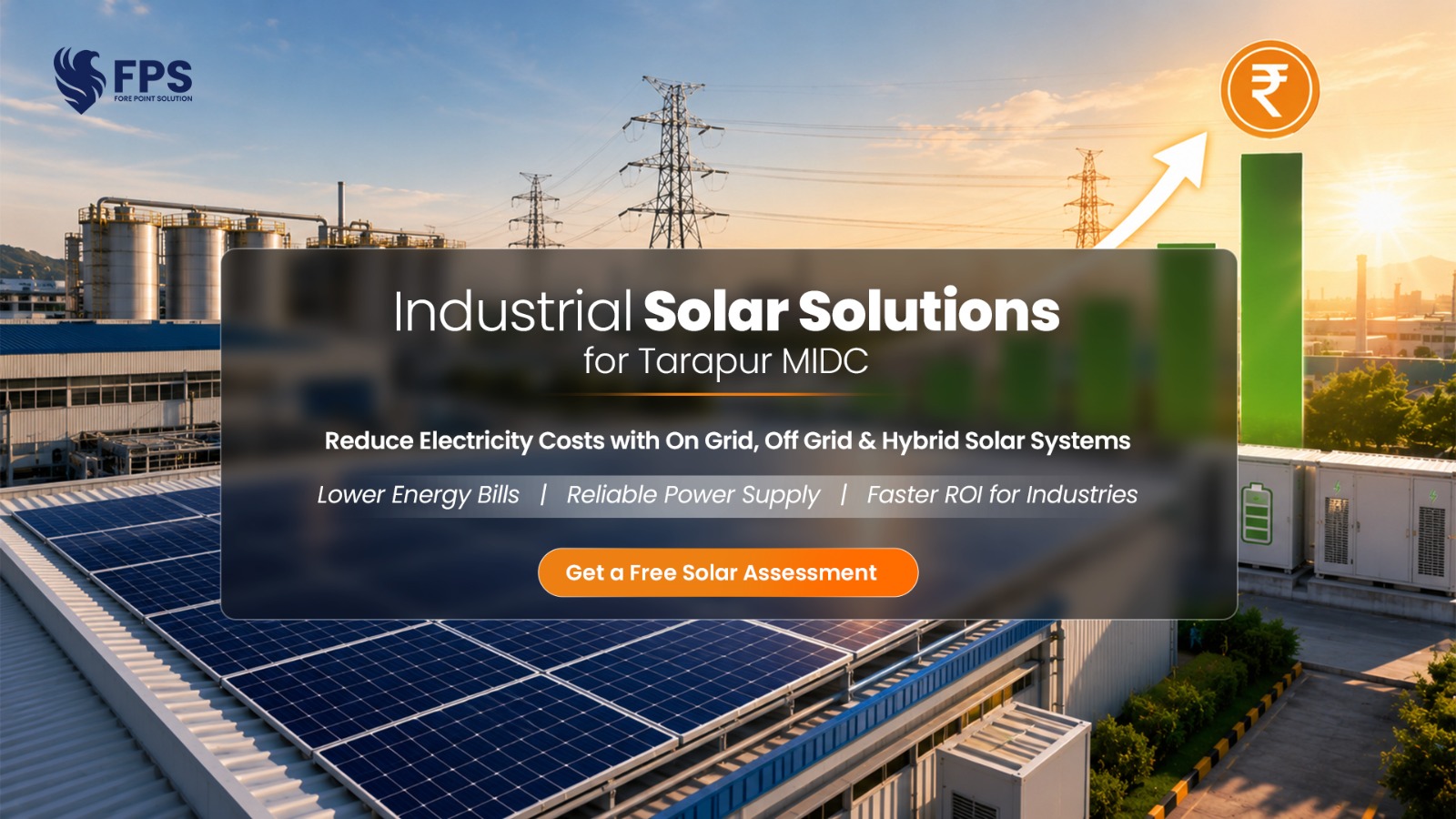
Electricity is one of the single largest operating expenses for any manufacturing unit in Tarapur MIDC. For plant heads managing continuous production shifts, the monthly power bill is not just a cost line it directly shapes profitability. With industrial tariffs in Maharashtra climbing steadily and no immediate relief in sight, many factory owners in the region are turning toward solar energy not as an experiment but as a calculated business decision.
If you manage operations in Tarapur MIDC and have been evaluating solar options, this guide covers what actually matters: which system suits your load profile, what financial impact you can realistically expect, and how a structured installation process works.
Why Industries in Tarapur MIDC Are Looking at Solar Energy Solutions
Tarapur MIDC is one of Maharashtra’s largest and most established industrial zones. The region houses a concentrated mix of chemical industries, pharmaceutical manufacturers, steel processing units, and heavy process industries. These are not light commercial users. Most industries operate around the clock and rely on power intensive equipment such as furnaces, reactors, and HVAC systems that run continuously.
Electricity costs for such operations can account for 15 to 25 percent of total production expenses. Rising grid tariffs, demand charges, and cross subsidies passed on to industrial consumers have made long term cost planning extremely difficult. Beyond cost, sustainability mandates from regulatory bodies and global buyers are pushing industrial units to demonstrate measurable reductions in their carbon footprint. Solar adoption directly addresses both pressures.
Understanding Tarapur MIDC Infrastructure and Energy Requirements
Tarapur MIDC operates with its own independent power supply infrastructure, separate from standard residential rooftops solar. The Tarapur Industrial Manufacturers Association, commonly known as TIMA, plays a central role in coordinating energy access, compliance, and industrial ecosystem support across the zone.
Manufacturing operations here demand uninterrupted power. Any disruption even brief can affect batch production, damage sensitive equipment, or trigger costly downtime. This is precisely why energy reliability is a primary consideration when evaluating solar systems, not just cost savings. A well designed solar solution needs to account for load variations, shift patterns, and integration with existing electrical infrastructure.
Environmental Compliance and Industrial Sustainability in Tarapur MIDC
Tarapur MIDC is home to a 25 MLD Common Effluent Treatment Plant, reflecting the zone’s commitment to environmental accountability. New industries setting up operations are expected to comply with Zero Discharge norms before commencing production.
For existing plants, regulatory expectations around environmental performance are only tightening. Adopting industrial solar is increasingly viewed by compliance teams and investors as a credible step toward measurable sustainability. It reduces grid dependence, lowers Scope 2 emissions, and supports ESG reporting requirements that are becoming standard for export focused manufacturers and publicly listed entities.
On Grid Solar Solutions for Tarapur Industries
An on grid solar system connects directly to the utility grid and feeds surplus power back into it through net metering. During peak daylight hours, your plant draws from the solar array first, reducing grid consumption significantly. At night or on cloudy days, the grid serves as the backup source.
This model works exceptionally well for industries with consistent daytime operations, such as pharmaceutical manufacturing, food processing, and assembly based manufacturing. Capital costs are lower compared to off grid setups since no battery storage is required. Return on investment typically falls within three to five years depending on plant size and consumption pattern.
Off Grid Solar Solutions for Industrial Facilities
An off grid solar system operates independently of the utility grid, supported entirely by solar generation and battery storage. This setup is particularly valuable for industrial facilities located in areas with unstable grid supply, or for operations where any grid dependency is a risk.
Warehousing units, remote processing facilities, and smaller captive power setups benefit the most from off grid configurations. While initial investment is higher due to battery bank requirements, the operational reliability it provides often justifies the cost for businesses where downtime translates directly to financial loss.
Hybrid Solar Systems for Manufacturing Plants
Hybrid solar systems combine grid connectivity with battery storage, giving manufacturing units the flexibility of both models. Solar generates power during the day, excess energy charges the battery bank, and the grid remains available as a fallback.
The real advantage here is peak load management. Industrial units in Tarapur often face steep demand charges during peak consumption windows. A hybrid system reduces dependency on grid power precisely during those high tariff hours. It also provides backup during grid outages, reducing downtime risk significantly. For chemical and pharmaceutical plants where process continuity is non-negotiable, hybrid systems represent the most complete solution.
How Industrial Solar Helps Reduce Operational Costs
The financial case for solar in industrial settings is straightforward. Depending on system size and actual consumption, plants can reduce electricity bills by 40 to 70 percent annually. Solar generation assets also provide protection against future tariff increases since the cost of solar power remains fixed once the system is commissioned.
Over a 25 year system lifespan, the cumulative savings far outpace the initial capital investment. Many businesses also access accelerated depreciation benefits under Indian tax law, improving the payback period further. Lower operational expenses translate directly into improved margins, stronger competitiveness, and predictable cost planning.
How Fore Point Solution Helps Industries Implement Industrial Solar Projects
Fore Point Solution works with industrial clients across Tarapur and Maharashtra to design and deliver solar solutions built around actual operational requirements. The process begins with a detailed site assessment and load analysis, ensuring the system design reflects real consumption patterns rather than generic estimates.
From system design and equipment selection to installation and commissioning, each project is managed end to end. Post installation maintenance support is included to protect system performance and ensure long term output. Whether your plant needs an on grid setup, a hybrid configuration with storage, or a fully off grid solution, Fore Point Solution customises the approach to your specific facility.
To explore what a solar solution could realistically deliver for your plant, connect with the Fore Point Solution team for a site evaluation and cost projection.
Conclusion
For industries operating in Tarapur MIDC, rising electricity costs are a major business concern that directly impacts production expenses, quarterly performance, and future expansion decisions. Solar energy provides a reliable solution for reducing operational costs, improving power reliability, and supporting long term sustainability goals.
The question for most plant heads is no longer whether solar makes sense. It is which system configuration delivers the best outcome for their specific facility. Fore Point Solution brings the engineering expertise and project experience to answer that question with precision, not approximation.
Reach out to Fore Point Solution to schedule a site assessment and understand exactly what solar can deliver for your plant in Tarapur MIDC.
Frequently Asked Questions
Q1. What is the best solar system for industries in Tarapur MIDC?
The ideal system depends on energy usage, work shifts, and grid reliability. Hybrid systems suit large manufacturing units, while on grid systems work well for stable daytime operations.
Q2. How much electricity cost can industries save with solar?
Industries in Tarapur MIDC can typically reduce electricity costs by 40 to 70 percent, depending on system size, energy consumption, and tariff structure.
Q3. Can chemical industries install industrial solar systems?
Yes, Solar systems are commonly used in chemical plants and can be designed for heavy loads, safety standards, and available rooftop or land space.
Q4. What is the difference between on grid and hybrid solar systems?
On grid systems depend on the utility grid and have no battery storage. Hybrid systems include batteries and provide better power continuity.
Q5. Do industrial solar systems support sustainability compliance?
Yes, Solar reduces grid dependency and carbon emissions, helping industries meet ESG and environmental compliance goals.
Q6. How long does an industrial solar installation take?
Most projects take four to eight weeks for installation and commissioning, while larger projects may require additional time.
Q7. Are solar systems suitable for pharmaceutical manufacturing units?
Yes, Pharmaceutical facilities benefit from solar because of their continuous energy needs. Hybrid systems often provide better reliability.
Q8. What factors affect industrial solar project cost?
Project cost depends on system capacity, solar type, available space, battery needs, existing infrastructure, and site work requirements.


