How Residential Rooftops Solar in Palghar, Wada & Vasai Are Becoming Long-Term Energy Assets

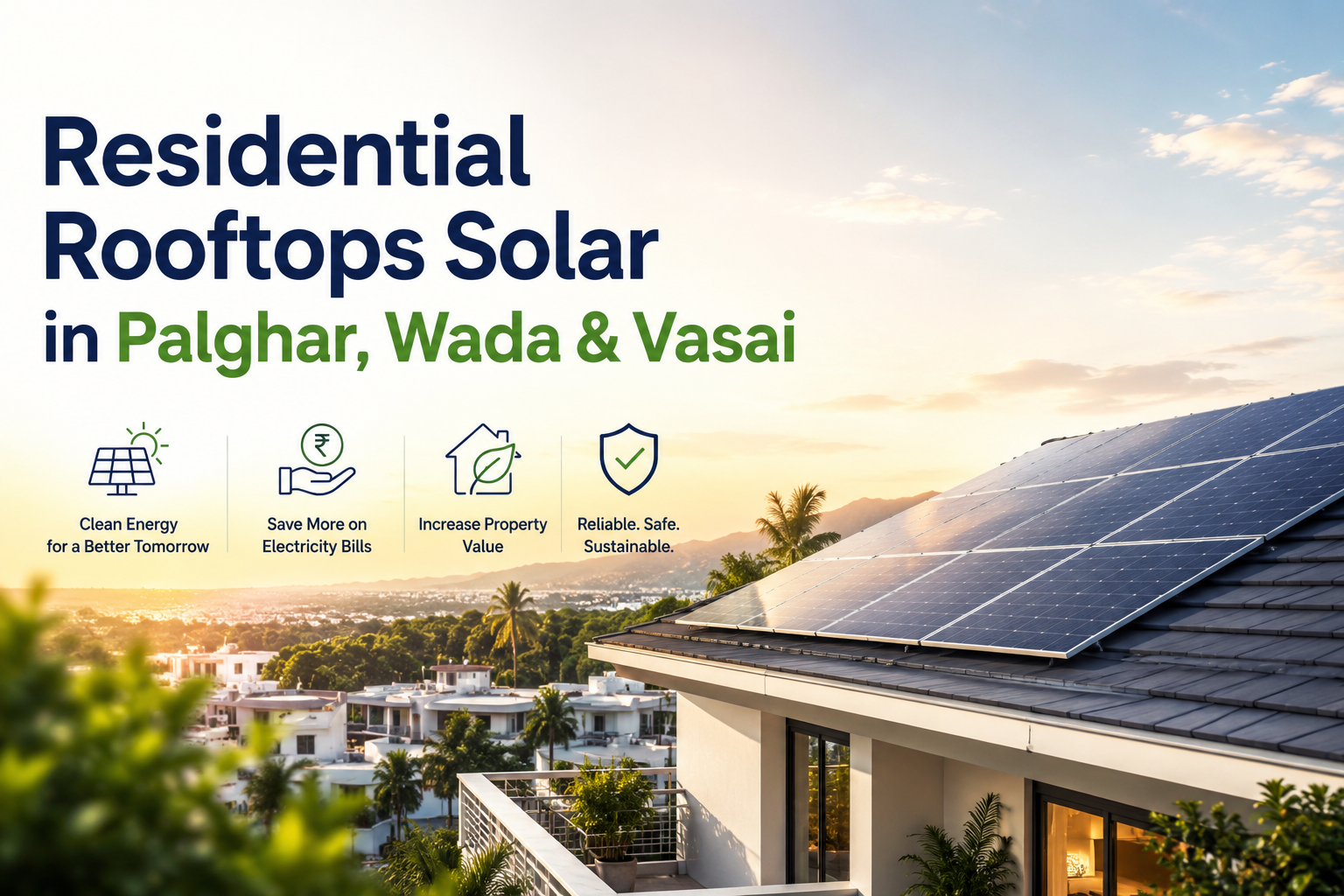
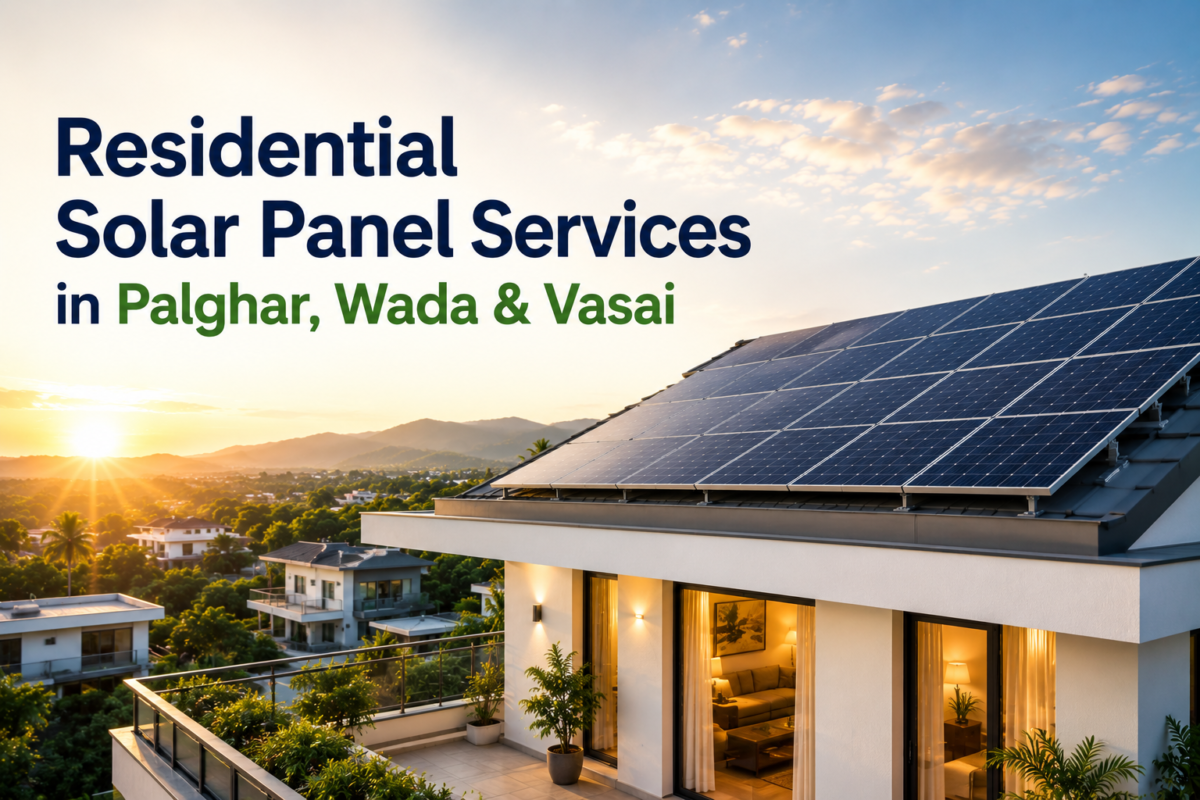
For many years, residential rooftops were viewed simply as unused terrace spaces used for water tanks, storage, or occasional household activities. However, this perception is gradually changing across regions like Palghar, Wada, and Vasai. Today, homeowners are beginning to see rooftops as valuable infrastructure capable of supporting long-term energy generation and smarter residential planning.
The growing adoption of residential solar systems is transforming how homeowners think about electricity usage, rooftop utilization, and future household energy requirements. Instead of depending entirely on conventional electricity sources, many families are now exploring ways to generate part of their daily power consumption directly from rooftop spaces.
This shift is especially visible in suburban and rapidly developing residential regions where independent homes, villas, row houses, and housing societies are expanding steadily. As a result, rooftop solar systems are no longer being viewed only as energy-saving installations but increasingly as long-term residential assets.
Companies such as Fore Point Solution are supporting this transition by helping homeowners across Palghar, Wada, and Vasai adopt residential solar systems designed around local housing patterns and energy requirements.
Residential Rooftops Are No Longer Just Structural Spaces
The role of rooftops in residential infrastructure is changing rapidly. In growing suburban regions, rooftops are increasingly becoming functional spaces capable of supporting energy generation, future utility planning, and sustainable infrastructure development.
Modern homes consume significantly more electricity compared to houses built a decade ago. Air conditioners, water pumps, refrigerators, smart televisions, internet systems, work-from-home setups, kitchen appliances, and home automation devices all contribute to rising household electricity usage.
As electricity dependence grows, homeowners are becoming more conscious about how unused rooftop spaces can contribute to long-term energy management. Rooftop solar systems allow families to utilize existing infrastructure without requiring additional land or structural expansion.
This transformation is gradually changing how residential properties are planned and valued. Rooftops are now being considered part of broader home utility infrastructure rather than leftover construction space.
Why Palghar, Wada & Vasai Offer Different Rooftop Solar Opportunities
Although Palghar, Wada, and Vasai are geographically connected, the way residential solar systems are planned differs considerably because of varying housing structures and development patterns.
Vasai: Dense Residential Infrastructure & Shared Rooftops
Vasai has experienced rapid urban growth with increasing apartment developments and housing societies. In such environments, rooftop planning often involves managing limited terrace availability alongside existing infrastructure such as water tanks, lift rooms, and utility equipment.
Housing societies in Vasai may focus more on using rooftop solar systems for common electricity consumption, including lifts, corridor lighting, parking lights, and water pumps.
Palghar: Expanding Residential Layouts & Independent Homes
Palghar’s suburban growth includes independent houses, villas, and row-house developments that generally provide more rooftop flexibility. Compared to denser urban regions, many residential properties in Palghar experience lower shading from neighboring buildings.
This allows homeowners to plan solar installations more freely while also considering future expansion requirements and evolving electricity usage patterns.
Wada: Larger Rooftops & Lower Urban Obstruction
Wada’s semi-urban residential environment often includes larger rooftops with fewer nearby construction obstructions. This creates better sunlight exposure and greater flexibility for solar panel orientation.
Because rooftop spaces are typically less crowded with infrastructure elements, homeowners in Wada may find it easier to optimize rooftop layouts for long-term solar energy generation.
These regional differences highlight why residential solar planning is becoming increasingly location-specific rather than following a standard installation model.
Residential Solar Planning Is Becoming More Future-Oriented
One major shift in residential solar adoption is the growing focus on future household energy requirements rather than only current electricity bills.
Families today are planning for increasing electricity usage over time. Remote work setups, additional air conditioners, electric vehicles, home office infrastructure, and modern appliances are steadily changing residential energy consumption patterns.
As a result, homeowners are now evaluating solar systems not only as immediate cost-saving solutions but also as part of long-term residential infrastructure planning.
Some homeowners are considering future scalability while designing rooftop solar systems so additional capacity can be added later if energy requirements increase. Others are focusing on energy independence and predictable long-term electricity management rather than short-term savings alone.
This future-oriented mindset is changing how residential solar projects are planned across Palghar, Wada, and Vasai.
Rooftop Design & Layout Now Influence Solar Efficiency More Than Ever
Many homeowners initially assume solar installation depends only on available rooftop area. However, rooftop layout, accessibility, and infrastructure design now play a major role in determining solar system efficiency.
Water tank placement, rooftop shading, terrace accessibility, parapet wall height, and rooftop slope all influence panel positioning and sunlight exposure.
In urban residential environments, nearby buildings may create shadow patterns during certain hours of the day, reducing energy generation efficiency if solar layouts are not planned properly.
Terrace accessibility also affects future maintenance and cleaning activities. Proper rooftop planning helps maintain efficient system operation while ensuring adequate space for inspections and repairs.
Structural stability is another important consideration. Solar mounting systems add additional rooftop load, making structural assessments essential before installation.
As residential infrastructure evolves, rooftop planning is becoming increasingly integrated with energy planning rather than treated as a separate consideration.
Long-Term Solar Performance Depends on Ongoing Service Support
Residential solar systems require more than proper installation alone. Long-term performance depends heavily on regular inspections, cleaning, inverter monitoring, and preventive maintenance support.
Dust accumulation, bird droppings, seasonal weather exposure, and rooftop debris may gradually reduce energy generation efficiency if maintenance is ignored. Coastal humidity and monsoon exposure in regions near Vasai and Palghar also influence rooftop system durability over time.
Local service support becomes especially valuable because nearby providers can respond faster for inspections, troubleshooting, and performance monitoring whenever required.
Homeowners may also require future upgrades as household electricity consumption changes. Additional panels, inverter upgrades, or monitoring improvements become easier when long-term support is available locally.
Companies such as Fore Point Solution are increasingly helping homeowners manage not only installation but also long-term residential solar performance across Palghar, Wada, and Vasai.
Residential Rooftops Are Becoming Part of Future-Ready Living
The growing adoption of rooftop solar systems reflects a larger shift in how residential infrastructure is evolving across suburban Maharashtra. Homes are no longer being designed only around living space and aesthetics; energy planning is becoming equally important.
As residential electricity consumption continues increasing, rooftops are gradually transforming into long-term infrastructure assets capable of supporting cleaner energy generation and smarter utility management.
Palghar, Wada, and Vasai are likely to witness even greater residential solar adoption as suburban development expands and homeowners prioritize future-ready living environments.
The future of residential infrastructure will increasingly depend on how efficiently rooftops are utilized not only for construction but also for sustainable energy generation and long-term energy resilience.
FAQs – Residential Rooftop Solar in Palghar, Wada & Vasai
1. Why are residential rooftops becoming important for solar energy generation?
Rooftops provide existing infrastructure space that can be used to generate electricity without requiring additional land.
2. Why does residential solar planning differ between Palghar, Wada, and Vasai?
Housing layouts, rooftop structures, urban density, and shading conditions vary across these regions, affecting solar installation planning.
3. Are independent homes better suited for rooftop solar systems?
Independent homes often provide greater rooftop flexibility and easier panel placement compared to densely populated apartment structures.
4. How does rooftop layout affect solar system efficiency?
Roof slope, water tank placement, shading, and accessibility directly influence solar panel positioning and energy generation performance.
5. Is residential solar planning becoming more future-oriented?
Yes, many homeowners now plan solar systems based on future electricity requirements, appliance growth, and evolving lifestyle needs.
6. Do rooftop solar systems require regular maintenance?
Periodic cleaning, inspections, and inverter monitoring help maintain long-term energy generation efficiency.
7. Does monsoon weather affect rooftop solar systems?
Solar systems continue functioning during cloudy weather, although energy generation may temporarily reduce during heavy rainfall periods.
8. Why is local solar support important after installation?
Local providers can offer faster maintenance support, rooftop inspections, troubleshooting, and long-term service assistance.
9. Can residential solar systems be expanded later?
Yes, many residential systems can be upgraded or expanded depending on rooftop space and future energy requirements.
10. Which company provides residential rooftop solar services in Palghar, Wada, and Vasai?
Companies such as Fore Point Solution provide residential rooftop solar installation and support services tailored to local housing and environmental conditions.